If you have heard a roofer, insulation contractor, or builder use the phrase what is a hot roof, the name can be misleading. A hot roof is generally an unvented roof assembly where the thermal and air-control layers are moved to the roofline instead of sitting on the attic floor. The attic is brought inside, or much closer to, the building’s conditioned envelope. For Puget Sound homeowners, that matters because roof insulation, air sealing, moisture control, and roofing materials must work as one system.
At Chase Construction North West, Inc., we look at the roof as more than shingles or metal. The deck, insulation, ventilation strategy, attic conditions, flashing, and exterior roofing all affect performance.
The Fast Take
- A hot roof is usually an unvented roof assembly, not simply a roof heated by the sun.
- Insulation is installed at or above the roof deck rather than only on the attic floor.
- Spray foam is common, but it is not the only option.
- Air sealing and condensation control matter as much as insulation value.
- A cool roof is a different concept based on how the roof surface handles solar heat.
- Hot roofs can work well when the assembly matches the building, climate, roofing material, and code.
What Makes a Hot Roof Different?
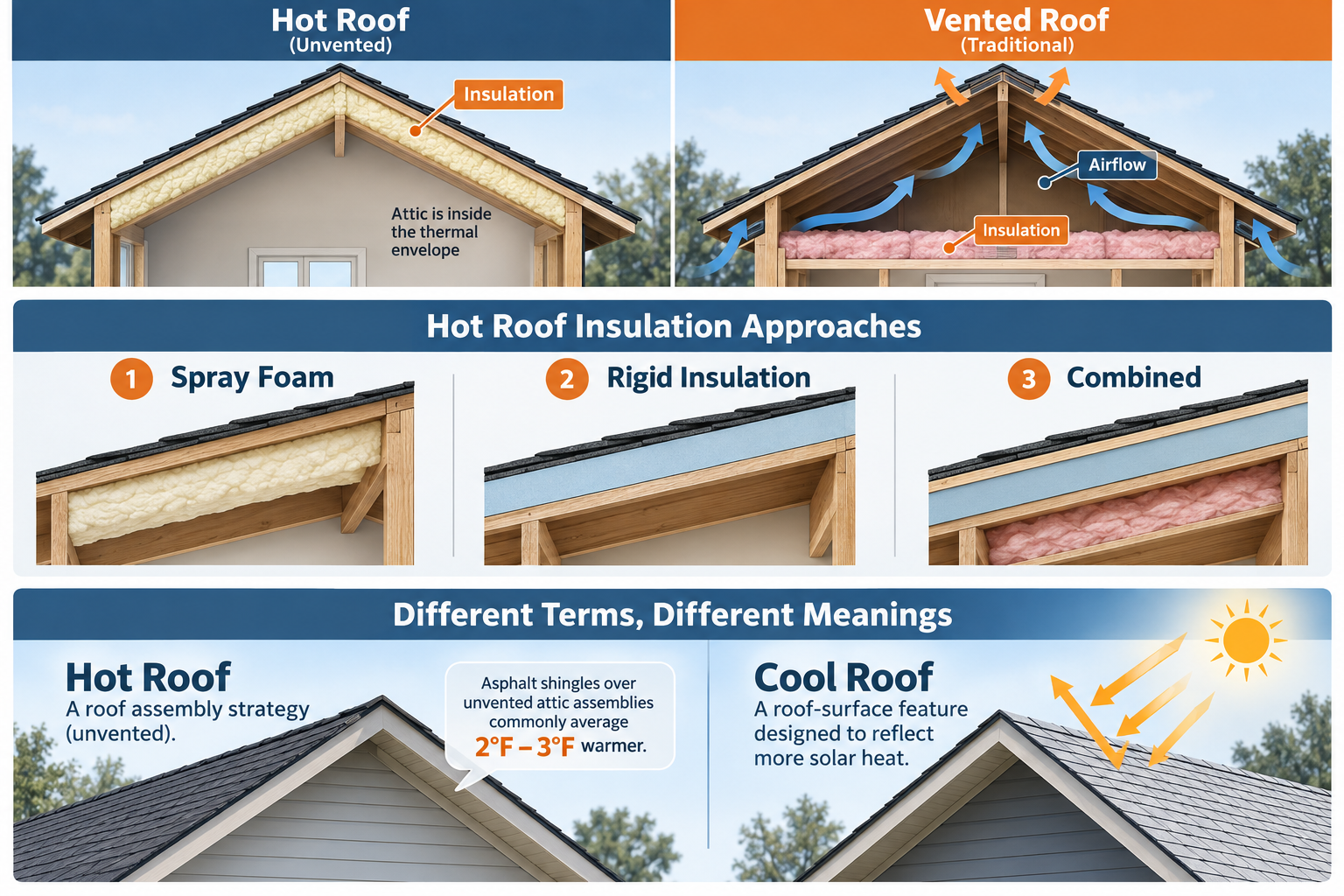
A simple way to understand what is a hot roof in practical terms is to look at where the building envelope sits. Traditional roofs often place insulation at the attic floor and use roof venting to move outdoor air through the attic. Intake vents at the eaves and exhaust vents near the ridge keep that attic outside the conditioned space.
A hot roof changes the boundary. Insulation moves to the roofline, either beneath the roof deck, above the deck, or in a code-compliant combination. The attic no longer relies on the same soffit-to-ridge airflow.
The U.S. Department of Energy’s Building America Solution Center guidance on unvented attic insulation explains that these assemblies can be useful when HVAC equipment or ductwork is in the attic because those components can remain within the building’s thermal and air-control layers.
Hot Roof vs. Vented Roof
| Feature | Hot Roof | Traditional Vented Roof |
|---|---|---|
| Ventilation below roof deck | Usually none | Typically required |
| Insulation location | At or above roof deck | Usually attic floor |
| Attic relationship to home | Inside or near thermal envelope | Outside thermal envelope |
| Main moisture strategy | Air sealing plus condensation control | Air sealing plus ventilation |
How Is a Hot Roof Insulated?
There is no single hot-roof recipe. Spray foam under the roof deck is common because it can insulate and air-seal complex framing at the same time. Closed-cell foam can also provide vapor control when the design calls for it.
But spray foam is not automatically required. Rigid roof insulation can be installed above the deck, and some assemblies combine air-impermeable insulation with fibrous insulation below it. The correct approach depends on climate and code.
The International Residential Code requirements for unvented attic assemblies address the thermal envelope, vapor control, insulation type, and condensation control. Converting a vented attic into a hot roof is not as simple as blocking vents and adding foam.
Practical Tip: If an existing attic has soffit and ridge vents, do not close them until the complete insulation and moisture-control strategy has been evaluated. A halfway conversion can leave the roof neither properly vented nor properly unvented.
Does a Hot Roof Actually Make Shingles Much Hotter?
Knowing what is a hot roof also helps clear up one of the biggest misconceptions about the name. An unvented assembly does not automatically mean dramatically hotter shingles.
Building Science Corporation’s guidance on unvented attics reports that asphalt shingles over unvented attic assemblies commonly average about 2°F to 3°F warmer than comparable shingles over vented assemblies. Roof color and orientation can have a larger effect on roof temperature than venting alone.
This is also where hot roof and cool roof terminology gets confused. Cool roofs are roofing surfaces designed to reflect more solar energy and absorb less heat. The U.S. Department of Energy’s cool-roof guidance evaluates these products using properties such as solar reflectance. A roof can use a cool-roof material while the assembly beneath it is vented or unvented.
Did You Know? “Hot roof” describes the assembly strategy, while “cool roof” describes roof-surface heat performance. They are not opposite versions of the same construction method.
Benefits and Tradeoffs Homeowners Should Understand
When homeowners ask what is a hot roof good for, the answer often comes down to where the ducts, insulation, and air barrier are located.
A properly designed hot roof can improve energy performance when ducts or mechanical equipment would otherwise sit in an unconditioned attic. It can also help with complex rooflines or cathedral ceilings where conventional ventilation is difficult.
There are tradeoffs. Moisture management has to be deliberate. If foam covers the underside of the deck, visual access to the sheathing can be reduced and some leaks may be harder to trace from inside. In winter, condensation control becomes especially important.
Hot roofs should not be selected simply because they sound newer or more energy efficient. The best assembly depends on the structure, climate, budget, mechanical layout, roofing material, and long-term maintenance plan.
When a Hot Roof May Make Sense
A roofing or building science professional may consider an unvented assembly when:
- HVAC equipment and ducts are located in the attic.
- Complex roof geometry makes conventional ventilation difficult.
- A cathedral ceiling leaves little room for traditional attic ventilation.
- A roof replacement creates an opportunity to add continuous insulation above the deck.
- The owner wants attic storage or mechanical space within the building envelope.
- Energy or green building goals call for tighter control of air leakage and heat flow.
How Chase Construction North West Approaches Roof and Attic Performance
Chase Construction North West, Inc. has served Tacoma and the greater Puget Sound area since 2002. The company provides residential and commercial roofing along with attic insulation, allowing homeowners to consider the roof covering and attic as connected parts of one system.
That matters with hot roofs. Before changing roof insulation or ventilation, the existing deck, roofing material, attic configuration, moisture conditions, penetrations, and signs of leaking should be evaluated. A roof replacement is also a practical time to discuss above-deck insulation because the roofing system is already being opened.
Why homeowners choose Chase Construction North West:
- Family-owned company established in 2002
- Licensed, bonded, and insured Washington contractor, license CHASECN981NN
- GAF Master Elite contractor status held since 2011
- Factory-trained and certified roofing professionals
- Residential roofing and attic insulation services under one company
- Website-listed warranty options include 50-year material and 25-year workmanship coverage
Plan the Roof as a Complete System
If you are considering a roof replacement, attic insulation upgrade, or a change from a vented attic to an unvented assembly, start with the whole system rather than one product. Chase Construction North West serves Tacoma, Puyallup, Edgewood, Seattle, Federal Way, Kent, Sumner, and surrounding Puget Sound communities. Get in touch to have your roof and attic conditions evaluated before deciding which assembly is right for the property.
Frequently Asked Questions
Does a Hot Roof Need Ridge Vents?
No, a properly designed hot roof is generally built as an unvented assembly.
Its thermal, air, and moisture-control layers are designed to work without conventional soffit-to-ridge ventilation.
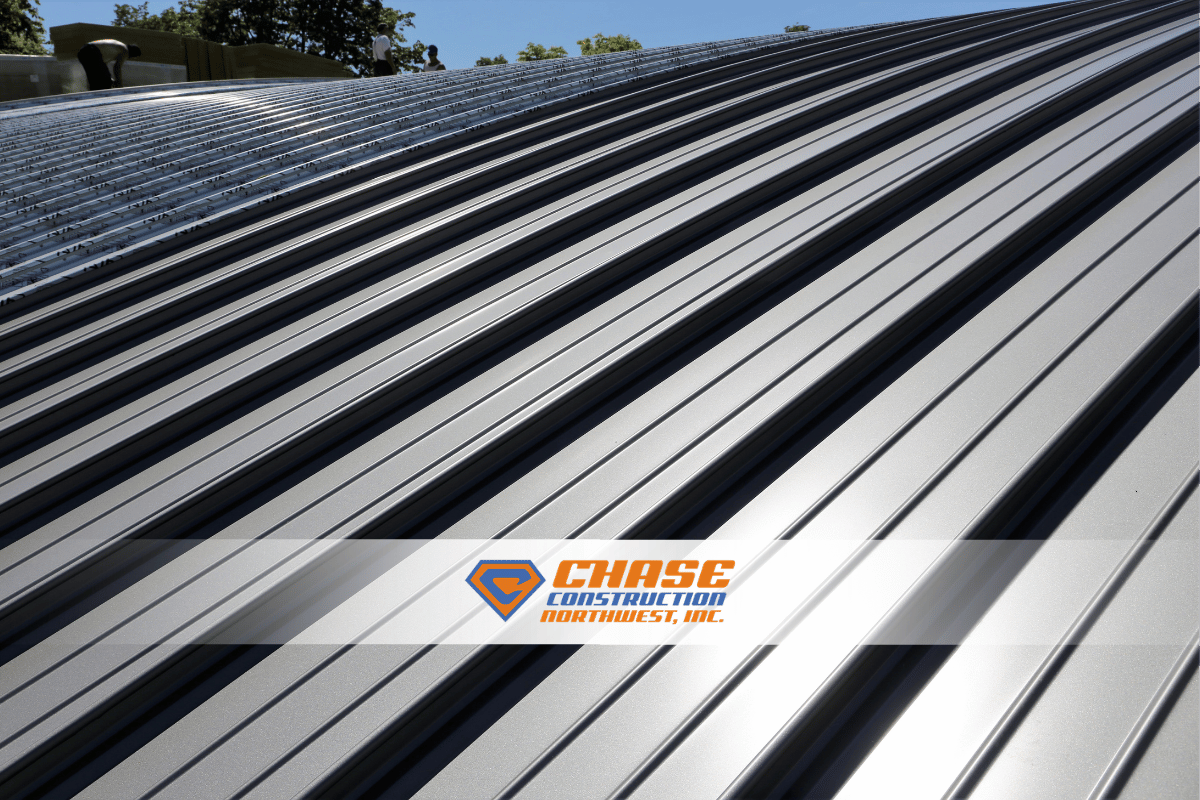
Can a Hot Roof Use Metal Roofing?
Yes, metal roofing can be used over an appropriately designed unvented assembly.
The underlayment, insulation, vapor control, and any above-deck ventilation still need to match the project.
Does a Hot Roof Automatically Void an Asphalt-Shingle Warranty?
No, not automatically.
Manufacturer requirements vary, so the design should be checked against the specific shingle manufacturer’s installation and warranty terms.
How Can I Tell if My Attic Is Vented or Unvented?
Check where the insulation is located and whether the roof has functioning soffit, ridge, gable, or other attic vents.
A professional inspection can confirm the actual air and thermal boundaries when earlier renovations have changed the attic.
Can an Existing Vented Attic Be Converted to a Hot Roof?
Yes, but it requires more than adding roof insulation.
Existing vents, moisture conditions, combustion equipment, air sealing, roof deck condition, and code requirements should all be reviewed first.