The question “can you walk on a metal roof” usually comes up when a homeowner needs to check a leak, clean a gutter, inspect storm damage, or prepare for solar work. The short answer is yes, many metal roofs can support limited foot traffic, but that does not mean every roof, panel, or location is safe to step on. Panel design, roof pitch, weather, structural support, footwear, and the condition of the roof all matter.
A metal roof is built to protect a building for decades. It is not built to function like a walkway. One poorly placed step can dent a panel, damage a coating, distort a seam, or put the person walking on it at serious risk.
What To Know Before Anyone Steps On The Roof
Here are the main points to keep in mind:
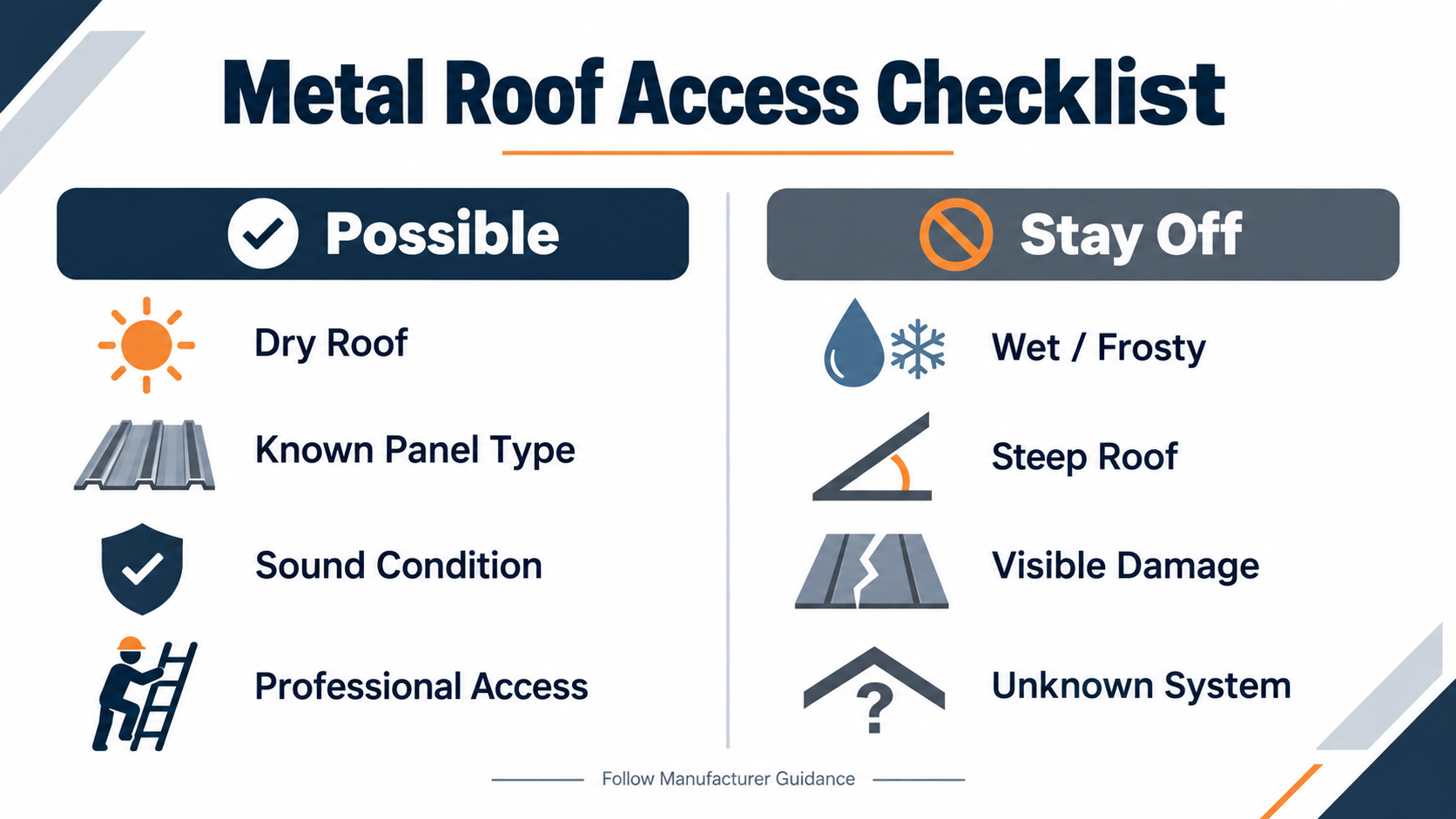
- A dry, sound metal roof may allow limited professional access.
- Never treat a wet roof, frosty roof, or snow-covered roof as safe to walk on.
- Where you step depends on the specific panel profile and its support underneath.
- Seams, ribs, flashings, penetrations, and damaged areas should generally not carry concentrated weight.
- Repeated foot traffic can wear or damage a coated roof even when one careful visit causes no obvious problem.
- Roof inspection and roof repair are usually safer when handled by trained roofing professionals with proper fall protection.
So, Can You Walk On A Metal Roof Without Damaging It?
Yes, some properly installed metal roofing systems can handle careful foot traffic, but the manufacturer’s instructions should determine where and how the roof can be accessed.
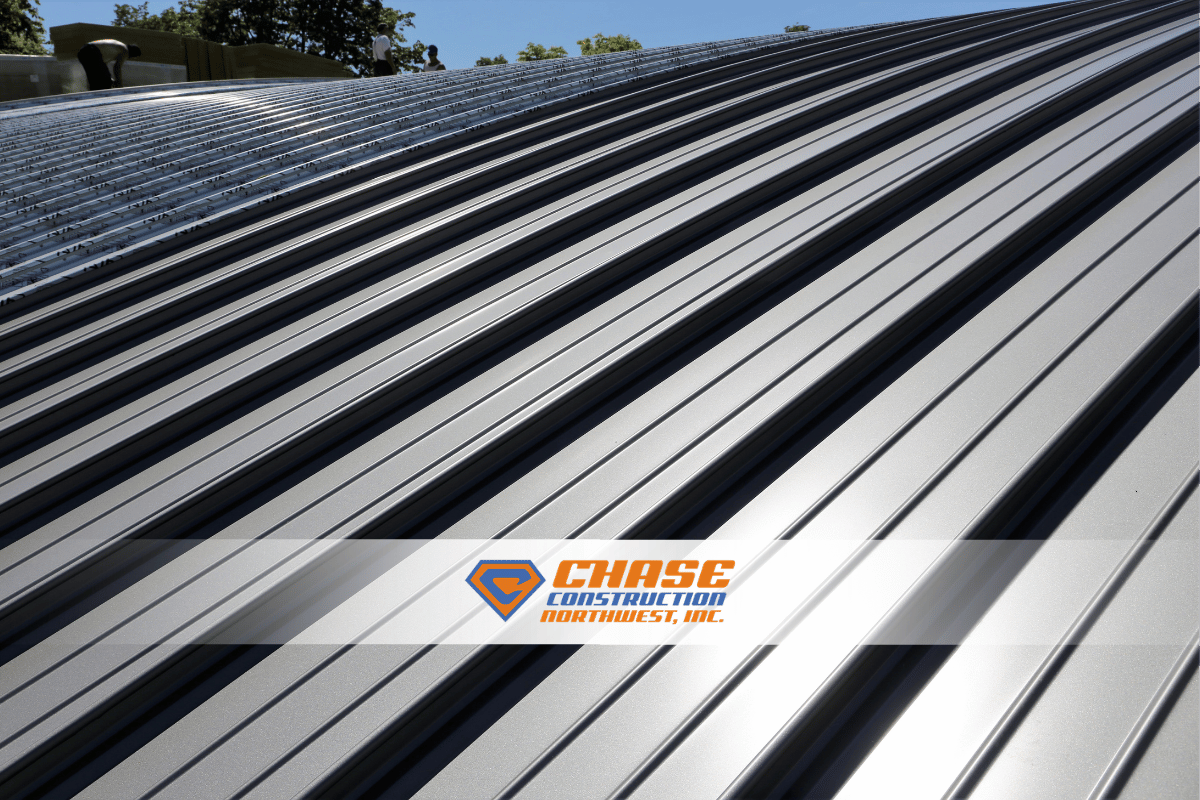
This is where generic advice online becomes risky. Metal roofs are not all built the same way. Standing seam panels, exposed-fastener panels, corrugated profiles, and metal shingles distribute weight differently.
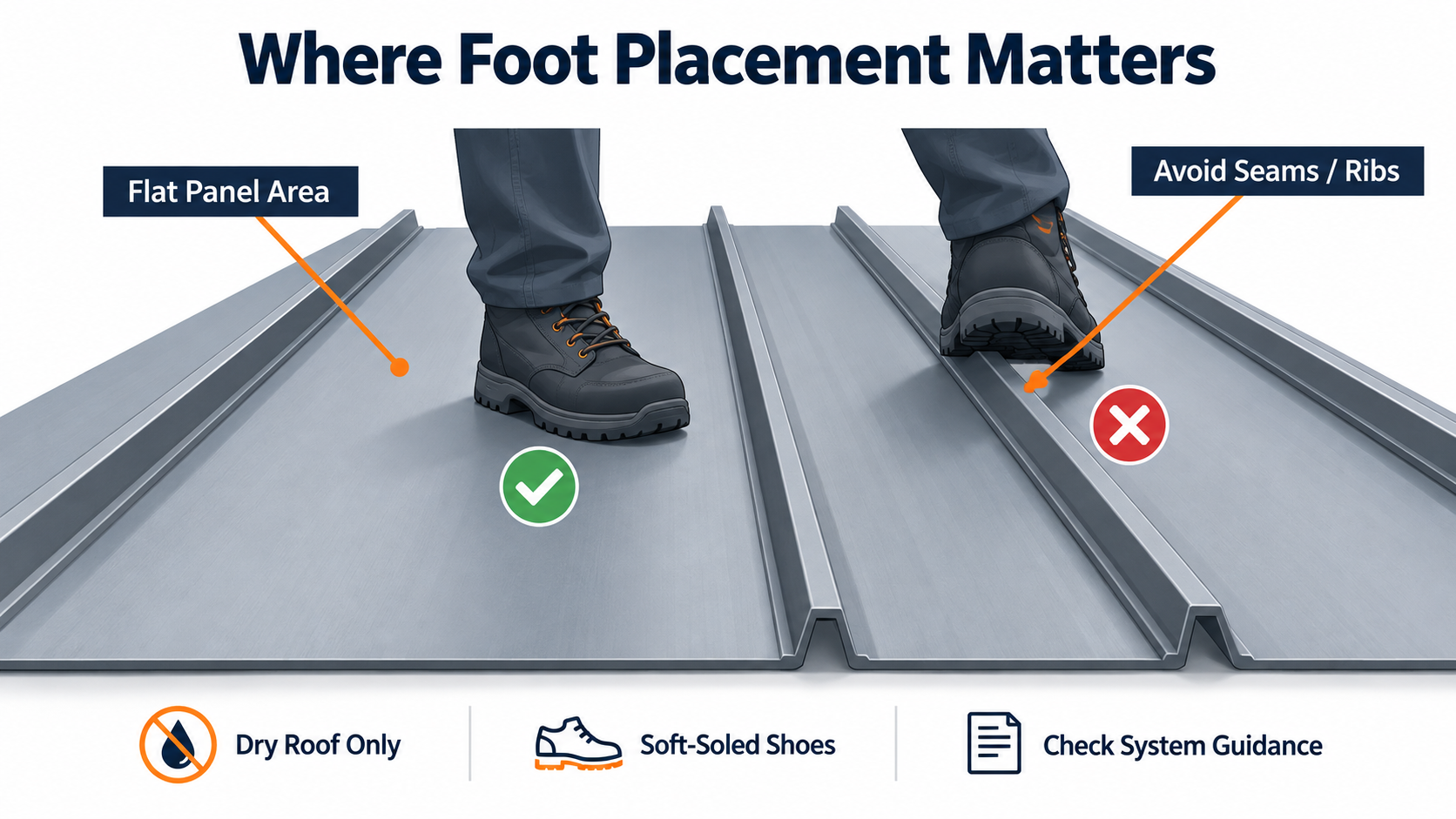
For example, ASC Building Products’ installation guidance for one standing-seam system instructs workers to use clean, soft-soled shoes, avoid the seams and ribs, and step in the flat areas of fully installed panels. It also warns that repeated walking can damage the panel finish.
That does not mean the same foot placement should automatically be used on every metal roof. Always follow the instructions for the actual system installed.
| Roof Condition | Recommended Approach |
|---|---|
| Dry, sound roof with known panel system | Limited professional access may be possible |
| Wet, frosty, snowy, dusty, or oily surface | Stay off the roof |
| Loose, corroded, sagging, or damaged panels | Avoid walking and schedule an inspection |
| Unknown panel type or support layout | Check manufacturer guidance or call a roofer |
Why A Wet Roof Changes Everything
A wet roof is not simply a slightly more slippery version of a dry one. Smooth metal can lose traction quickly when covered by rain, morning dew, frost, ice, dust, or organic debris.
Even experienced roofers plan around weather conditions because footwear alone cannot remove the risk of a fall.
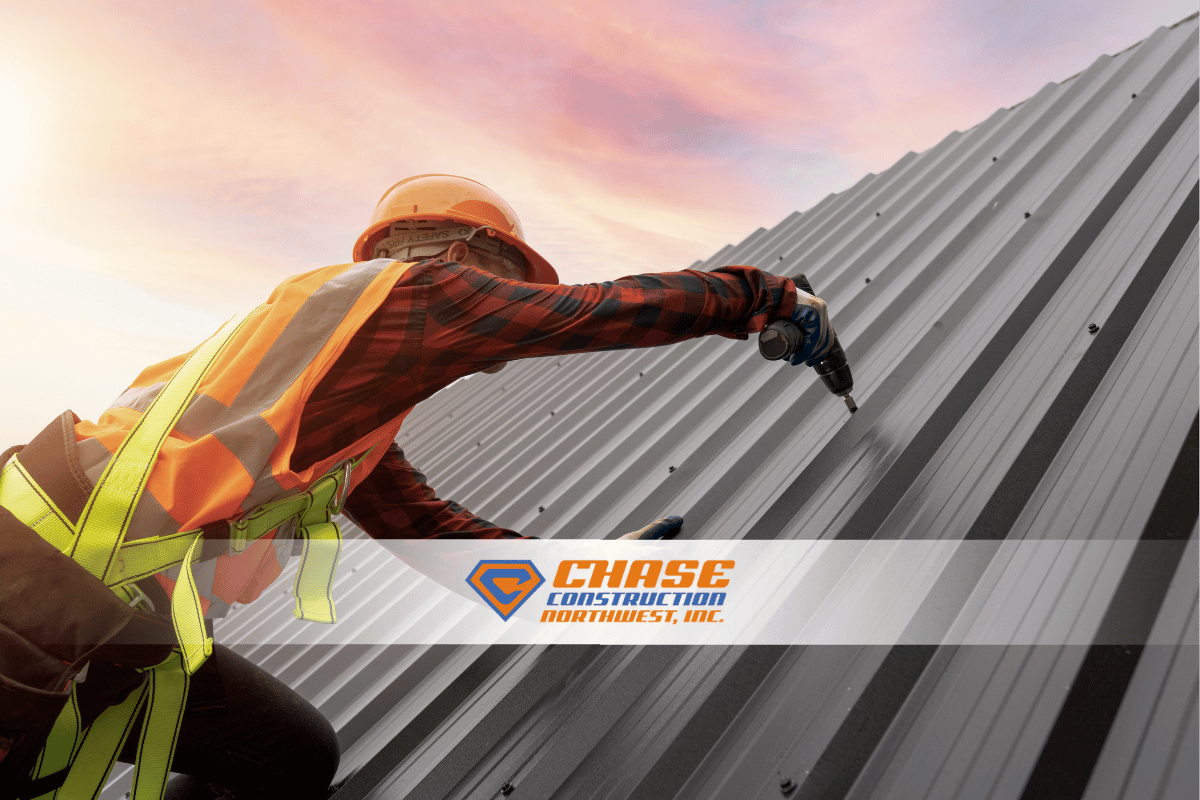
OSHA’s residential fall-protection guidance emphasizes fall protection as a critical part of roofing work. For workers in residential construction, OSHA requires conventional or permitted alternative fall protection when they are working six feet or more above a lower level.
Safety Tip: If the roof surface is wet, frosty, icy, or visibly slick, the correct step is not a more aggressive shoe. It is staying off the roof.
Foot Placement Matters More Than Most Homeowners Expect
Damage from walking is usually caused by concentrated weight in a place that is not designed to take it.
A person may weigh far less than the snow load or wind load a roof is engineered to withstand, but those loads are distributed differently. A boot places weight into a very small area. If that step lands on an unsupported section, raised seam, flashing, or weakened panel, the concentrated weight can cause a dent or deformation.
Professional roof access begins with understanding what is underneath the visible metal.
On some systems, the safest walking area is the flat portion of a panel near structural support. On another design, the manufacturer may specify a different location. That is why guessing based only on what the surface looks like is a bad strategy.
What About Standing Seam Metal Roofing?
Standing seam roofing deserves extra care because the raised seams are functional parts of the roofing system.
Avoid assuming that a seam is stronger simply because it is raised. Walking directly on a seam can distort it on certain systems. The OSHA guidance specifically covering standing seam metal roofs also shows why professional roof access involves more than footwear. Proper anchors, access equipment, and fall-protection planning are part of the job.
This becomes especially important when someone needs roof access for solar panels, skylights, vents, chimney work, or other rooftop equipment.
Practical Tip: Before allowing another trade onto a metal roof, confirm that they understand the roof system and how their equipment, tools, and walking path could affect the panels and finish.
Can Walking Cause A Roof Leak?
Walking by itself does not automatically cause a leak. Improper walking can create conditions that later allow water in.
Possible problems include:
- Bent or distorted seams
- Damaged flashing around penetrations
- Scratched protective coatings
- Loose or stressed fasteners
- Dented panels that change how water drains
- Damage around ridge, valley, or edge details
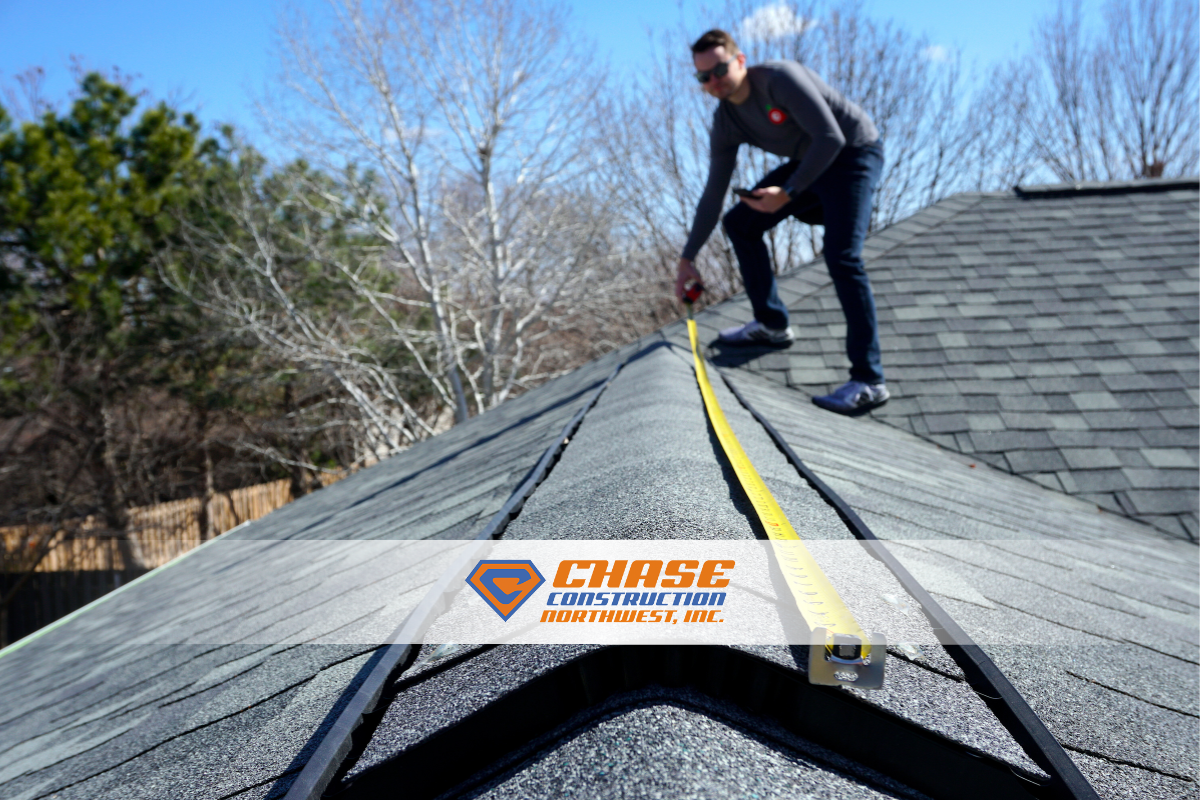
If a leak appears after someone has been on the roof, a professional roof inspection can help determine whether the problem involves a panel, flashing detail, fastener, penetration, or another part of the system.
The National Roofing Contractors Association’s metal roof maintenance guidance also emphasizes scheduled inspection and maintenance as part of protecting the long-term performance of metal panel roof assemblies.
When Roof Access Should Be Left To A Professional
Some situations are not good candidates for homeowner access at all.
A steep roof, wet surface, unfamiliar panel system, visible corrosion, storm damage, loose material, or suspected structural problem should be treated cautiously. The same applies when roof repair requires working near an edge, valley, skylight, chimney, or another penetration.
Even a roof that looks solid from the ground can have a weakened section that is not obvious until someone puts weight on it.
If your goal is simply to determine whether a leak, damaged panel, gutter problem, or flashing issue needs attention, professional inspection usually provides the information without exposing you or the roofing system to unnecessary risk.
Metal Roof Experience From Chase Construction North West
Chase Construction North West, Inc. has served homeowners and businesses in the Puget Sound region since 2002. The company installs and works with multiple metal roofing profiles, gauges, finishes, and standing seam systems, so evaluating safe roof access begins with identifying the actual roofing system rather than applying one rule to every roof.
If you are asking can you walk on a metal roof because you have spotted possible damage, a leak, loose flashing, or another concern, bringing in an experienced roofer also means the roof can be evaluated without unnecessary foot traffic. The team provides metal roofing installation, inspection, maintenance, and roof repair for residential and commercial properties.
Why Choose Chase Construction North West?
- Serving the Puget Sound region since 2002
- Washington contractor license CHASECN981NN
- Licensed, bonded, and insured
- Factory-trained and certified metal roofing installers
- Active member of the National Roofing Contractors Association and Roofing Contractors Association of Washington
- Company review page lists a 5-star average across 16 published reviews
Need Your Metal Roof Checked?
Chase Construction North West serves communities throughout King, Pierce, Thurston, and Snohomish counties, including the greater Tacoma and Seattle areas. If you are concerned about roof damage, leaks, safe roof access, or the condition of an existing metal roofing system, get in touch with the Chase NW team to arrange a professional evaluation.
Frequently Asked Questions
Can Walking On A Metal Roof Void The Warranty?
Improper foot traffic may affect warranty coverage if it damages the panels, coating, seams, or other parts of the roofing system.
Review the specific manufacturer warranty before allowing unnecessary roof access.
Can You Walk On A Metal Roof To Clean Gutters?
It is usually better to clean gutters using appropriate access equipment without walking across the roof whenever possible.
Walking near roof edges also increases fall risk, especially when leaves, water, or debris are present.
Will Shoes Scratch A Metal Roof?
Dirty, hard, or abrasive footwear can mark or damage some coated metal surfaces.
Manufacturer instructions commonly call for clean, soft-soled footwear when professional access is required.
Can Solar Installers Walk On A Metal Roof?
Qualified solar installers may need roof access, but they should understand the specific metal roofing system and use suitable fall protection and mounting methods.
Poorly planned walking or equipment placement can damage panels or roof details.
Can You Walk On A Metal Roof After It Rains?
No, walking on a recently wet metal roof should be avoided until the surface is completely dry.
Rain, dew, frost, and other moisture can dramatically reduce traction and increase the risk of falling.