Will hail damage a metal roof? Yes, it can, but visible marks do not always mean the system has failed. Metal roofing can absorb considerable force by deforming instead of cracking. Small dents may affect appearance only, while stronger strikes can disturb seams, fasteners, flashing, coatings, or penetrations. What matters most is whether the roof still sheds water and protects the property as designed.
What to know right after severe weather
- A dent does not automatically mean replacement is necessary.
- Stone size, wind, panel profile, metal thickness, and support below the panel all affect the result.
- Marks near seams, fasteners, ridge caps, vents, and flashing deserve closer attention than shallow field dents.
- A Class 4 rating is valuable, but it does not promise a dent-free surface.
- Insurance can treat cosmetic and functional roof damage differently.
- A professional damage inspection is safer than walking the roof yourself.
What does hail actually do to metal roofing?
Hail hits a roof with concentrated force. On metal, the most common result is a shallow depression. The Insurance Institute for Business & Home Safety reports that metal coverings can dent, while current evidence does not show that denting by itself reduces functionality.
Size matters, but so do wind speed, strike angle, panel profile, gauge, and the duration of the weather event. The National Weather Service defines a severe thunderstorm as one capable of producing hail at least 1 inch in diameter or wind gusts of at least 58 mph. Those conditions can damage roofs, vehicles, trees, and other property.
Did you know? Visible denting can change how a roof looks without changing how it sheds water. Appearance and function are not always the same thing.
Cosmetic dent or functional damage?
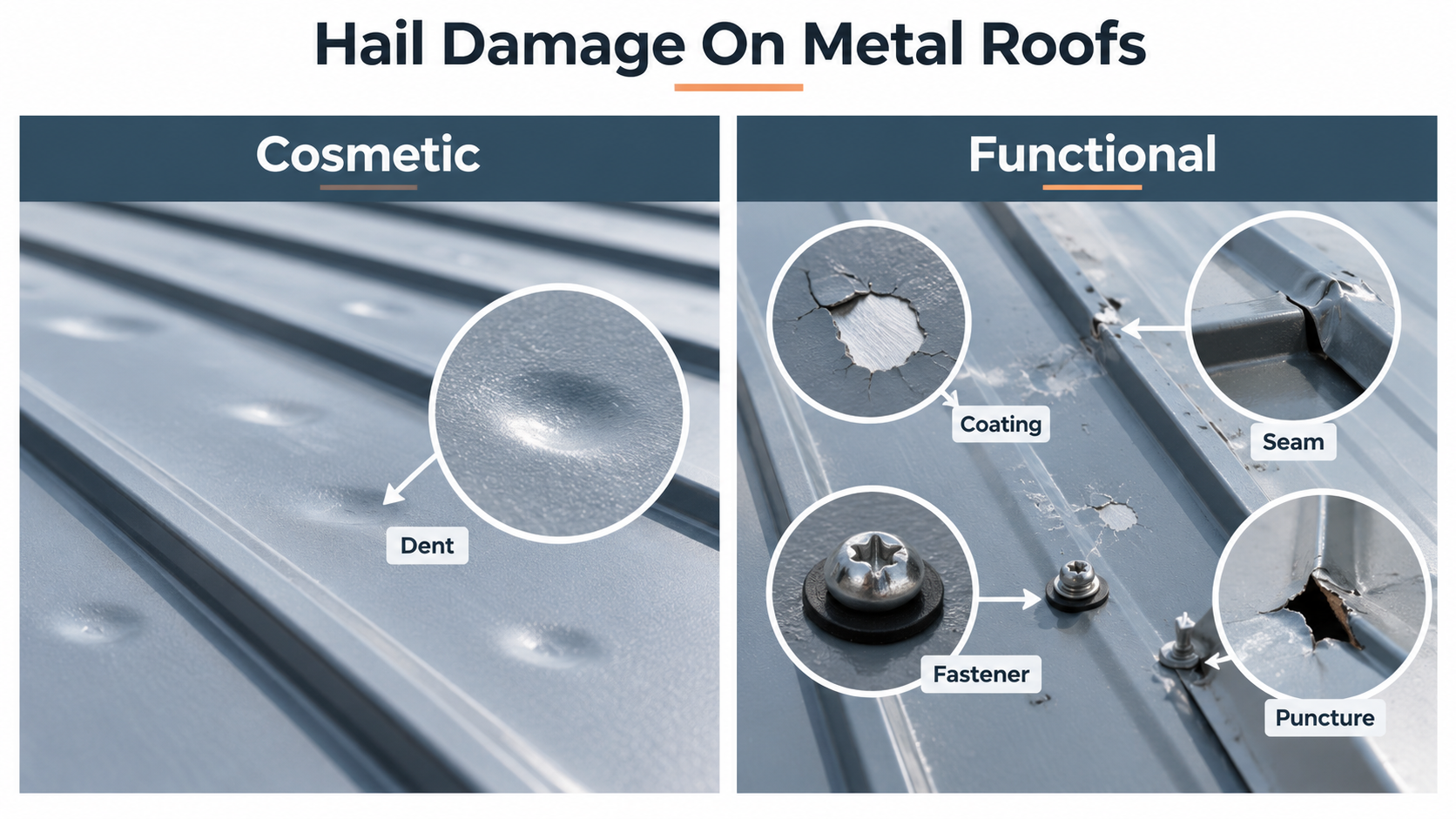
When homeowners ask will hail damage a metal roof, this distinction is the most useful place to start. Cosmetic dents change appearance. Functional problems affect the system’s ability to keep water out or shorten its useful life.
| What you see | What it may mean | What to check next |
|---|---|---|
| Shallow dents with intact finish | Often cosmetic | Panel coating and nearby seams |
| Chipped or cracked coating | Possible functional damage | Exposed metal and corrosion risk |
| Deformed seam or edge | Possible water-entry risk | Locked seam and flashing |
| Damaged exposed fastener | Possible seal failure | Washer, screw position, panel fit |
| Puncture or split | Clear roof damage | Underlayment, deck, interior moisture |
Under ordinary conditions, hail will not penetrate a properly selected panel easily. No roofing material is hail-proof, though. Severe hail impacts can affect thinner areas, accessories, and connection points even when the main panel field still looks serviceable.
Does a Class 4 rating mean the surface cannot dent?
No. Class 4 describes a high level of tested impact resistance, not a guarantee that the face will stay perfectly smooth.
The IBHS Roof 101 guide explains that UL 2218 rates roofing from Class 1 through Class 4. For metal, the Class 4 test uses the force associated with a 2-inch steel ball. The evaluation focuses on failure such as cracking on the back of the panel rather than surface appearance.
That is an important detail when comparing these systems. Testing can apply to different roofing products, including panels and metal shingles. A strong rating can reduce the chance of serious failure, but it cannot make a system immune to every severe-weather event.
What should you check afterward?
If you are still wondering will hail damage a metal roof after a local weather event, do not judge it from the driveway alone. Also, do not climb onto wet metal to search for dents. The surface can be extremely slippery, and poor foot placement can create new deformation that looks like storm-related damage.
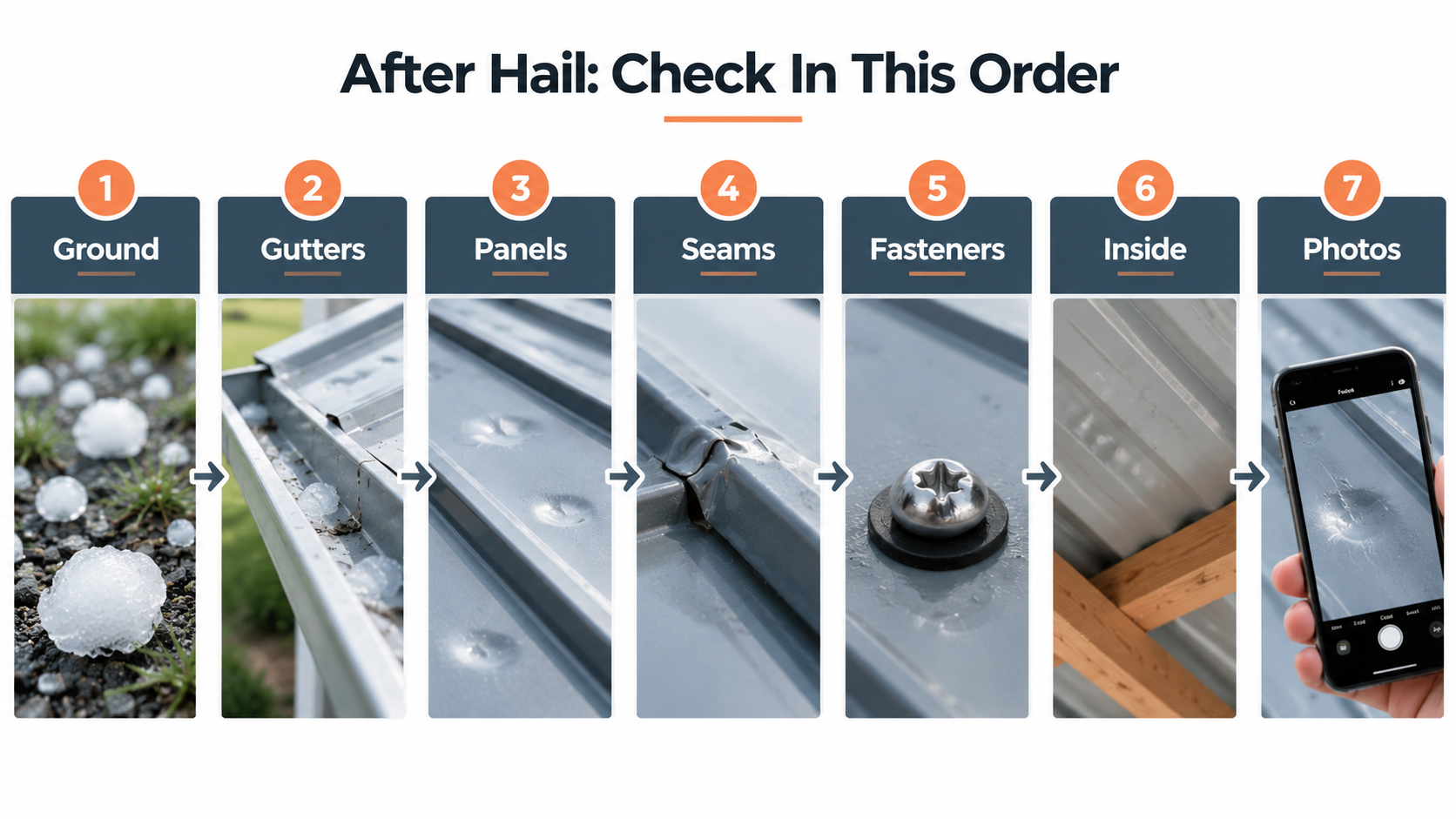
A careful inspection usually follows this order:
- Check the ground and exterior for clues about stone size and direction.
- Look at gutters, downspouts, trim, vents, and other softer components.
- View panels from different angles so low light can reveal depressions.
- Inspect seams, ridge caps, flashing, and penetrations closely.
- Check exposed fasteners and washers where the system uses them.
- Look inside the attic or upper rooms for new moisture signs.
- Photograph conditions before repairs or coating work changes the evidence.
Practical tip: If water is entering the building, stop the intrusion safely first. Document the affected area before permanent roof repair whenever possible.
Will insurance cover storm damage?
Coverage depends on the policy and the physical condition of the system. Insurance may treat a puncture, failed seam, damaged flashing, or another functional problem differently from dents that only change appearance.
Washington’s Office of the Insurance Commissioner recommends documenting losses with photos and records, reviewing coverage, and keeping copies of claim materials. It also explains that policyholders can choose their own contractor for covered repairs.
Before filing, check the policy for wind and hail deductibles, cosmetic-damage exclusions, replacement-cost terms, and special wording that may apply to this type of roofing. A contractor can document the physical findings, but the insurer decides coverage under the policy.
Where professional metal roofing experience matters
Chase Construction North West, Inc. has served the Puget Sound region since 2002 and works on residential and commercial systems, including standing seam installation, inspection, maintenance, and metal roof repair. The company serves Pierce, King, Thurston, and Snohomish counties, including communities such as Tacoma, Seattle, Edgewood, Puyallup, Auburn, Federal Way, Bellevue, Kent, and Olympia.
After severe weather, the important part is not simply counting dents. Panels, seams, flashing, penetrations, fasteners, drainage paths, and conditions below the metal need to be considered together. That helps separate a cosmetic issue from damage that needs repair, and it helps avoid replacing sound material unnecessarily.
The company’s website shows a 5.0 average across 16 published reviews. Homeowners can also use Washington Labor & Industries’ contractor hiring guidance to verify registration, bond, insurance, and other records before hiring any roofing contractor.
Why choose Chase Construction North West, Inc.?
- Family owned and operating since 2002
- Washington contractor license CHASECN981NN
- Licensed, bonded, and insured
- Factory-trained and certified roofing installers
- GAF Master Elite status maintained since 2011
- Five years as a President’s Club member
- Up to 50-year material and 25-year workmanship warranties on qualifying systems
Get your roof checked after hail
So, will hail damage a metal roof badly enough to need professional attention? Sometimes, and the answer depends on where the force landed and what it affected.
If you see dents, damaged trim, a new leak, or other changes after severe weather, get in touch with Chase Construction North West for an evaluation. The team serves homeowners and businesses throughout Pierce, King, Thurston, and Snohomish counties.
Frequently asked questions
Can small hailstones dent metal roofing?
Yes. Small stones can leave marks, especially on broad, flatter panel areas.
Minor dents do not automatically mean the assembly has lost its ability to keep water out.
Are metal roofs better than shingles in hail?
Metal roofs can offer strong impact resistance, while asphalt shingles may lose granules or suffer bruising.
Performance still depends on the exact product, installation quality, roof design, and severity of the storm.
Can hail cause a leak later?
Yes, if a strike compromises a seam, fastener, flashing, coating, or penetration.
A shallow dent with intact connections and finish is less likely to create a leak by itself.
Can a dented panel be repaired without full replacement?
Sometimes. Localized panel or accessory damage may be repairable.
Widespread functional problems, damaged seams, or multiple compromised panels can require a larger replacement area.
Does metal roofing help with fire resistance too?
Yes. Metal itself is noncombustible.
However, total fire performance depends on the complete roofing assembly, including the deck, underlayment, insulation, and tested system rating.