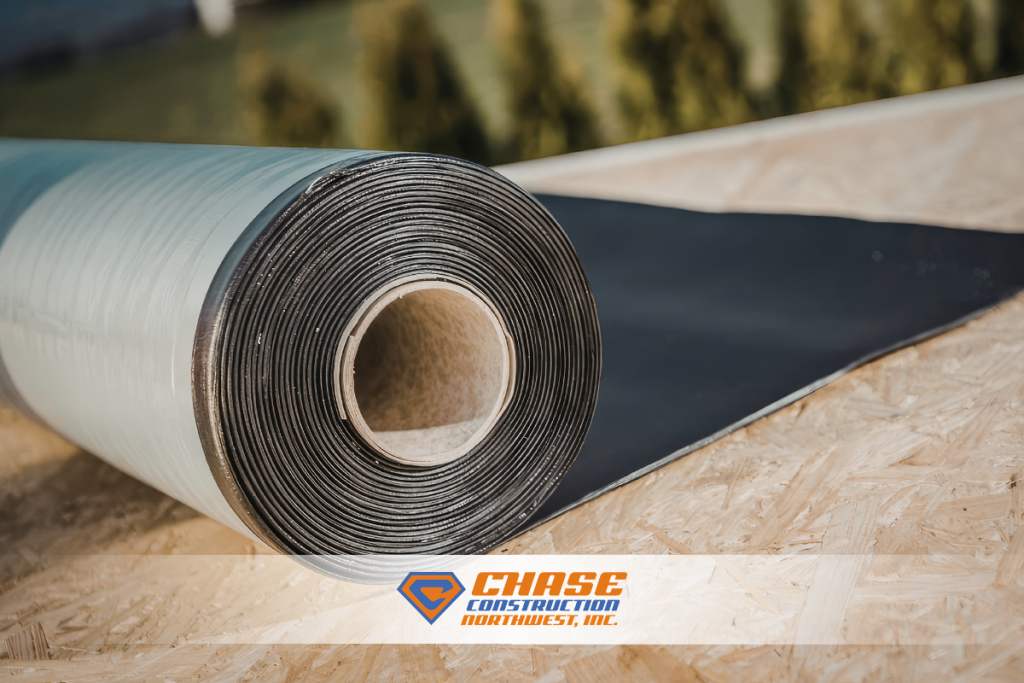
If you are asking, “What is rolled roofing?” the simplest answer is that rolled roofing is a roofing material manufactured in large rolls and installed in overlapping sheets instead of individual shingles. It is often used on low slope roofs, sheds, garages, porches and other simple roof structures where traditional shingles may not be the best fit.
At Chase Construction Northwest, this is a question we hear from homeowners often. As our team puts it, “What is rolled roofing? That’s a question that we get here at Chase Construction Northwest.” Rolled roofing is a familiar product in the roofing industry, but it is not always the best solution for residential roofs in the Pacific Northwest.
In fact, our team is clear about how we approach this material: “To be honest, we don’t even know because we do not use it.” While that statement is a bit tongue-in-cheek, the point is important: Chase Construction Northwest does not typically recommend rolled roofing because there are often better, longer-lasting options for low slope roof applications.
Roll Roofing Basics
Roll roofing is commonly made from asphalt-based materials and comes in wide sheets or rolls. Unlike asphalt shingles, which are installed one piece at a time, rolled roofing is applied in long sections that overlap. This allows it to cover a roof surface quickly.
As our team explains, “Rolled roofing, I’m familiar with it, yes. I’ve seen it. I’ve seen it applied.” It is a known product, and it can be found on certain structures. However, just because a material exists does not mean it is the right choice for every roof.
Traditional asphalt roll roofing is usually thinner than shingles and is often chosen because it is affordable and fast to install. It may be used on garages, sheds, workshops, porches and other simple structures. However, it usually does not offer the same lifespan, durability or appearance as higher-quality roofing systems.
Is Rolled Roofing Good for Homes?
Rolled roofing is primarily used on lower pitch roofs. As Chase Construction Northwest notes, “It doesn’t work that well with various different types of roofing or different types of homes.”
That is one of the main concerns with rolled roofing. It can be tempting because of the lower upfront cost, but it may not provide the long-term protection many homeowners need. Residential roofs must handle rain, wind, moss, debris, temperature changes and ongoing moisture exposure, especially in the Pacific Northwest.
Rolled roofing may work in some limited situations, but it is not a universal solution. The roof pitch, drainage, ventilation, decking condition and exposure all matter.
Low Slope Roof Applications
Low slope roofs require different materials than steep slope roofs. Standard asphalt shingles rely on gravity to shed water quickly. On a lower pitch, water drains more slowly, which increases the risk of leaks if the wrong material is used.
Rolled roofing is often considered because, as our team says, it “primarily is used on a lower pitch and can just be rolled right on top of another roof.”
However, this type of installation is not something Chase Construction Northwest recommends. Installing a product over an existing roof without properly evaluating the roof deck, drainage and moisture conditions can create future problems. Moisture may become trapped, seams may fail and leaks can develop over time.
As our team states clearly, “This type of application here at Chase Construction is something that we don’t recommend.”
Why Chase Construction Northwest Does Not Recommend Rolled Roofing
While rolled roofing can seem like a quick and inexpensive option, it is usually not the best long-term roofing system for homes. The biggest concerns include:
- Shorter lifespan compared to many other roofing systems
- Lower durability in harsh weather
- Greater risk of seam failure if installed poorly
- Limited curb appeal
- Potential moisture issues when installed over an existing roof
- Not ideal for many residential applications
The lowest upfront cost does not always equal the best value. If a roof fails early or needs frequent repairs, the total cost can become much higher over time.
That is why Chase Construction Northwest focuses on proven systems that are better suited for low slope roofing needs.
Better Options for Low Slope Roofs
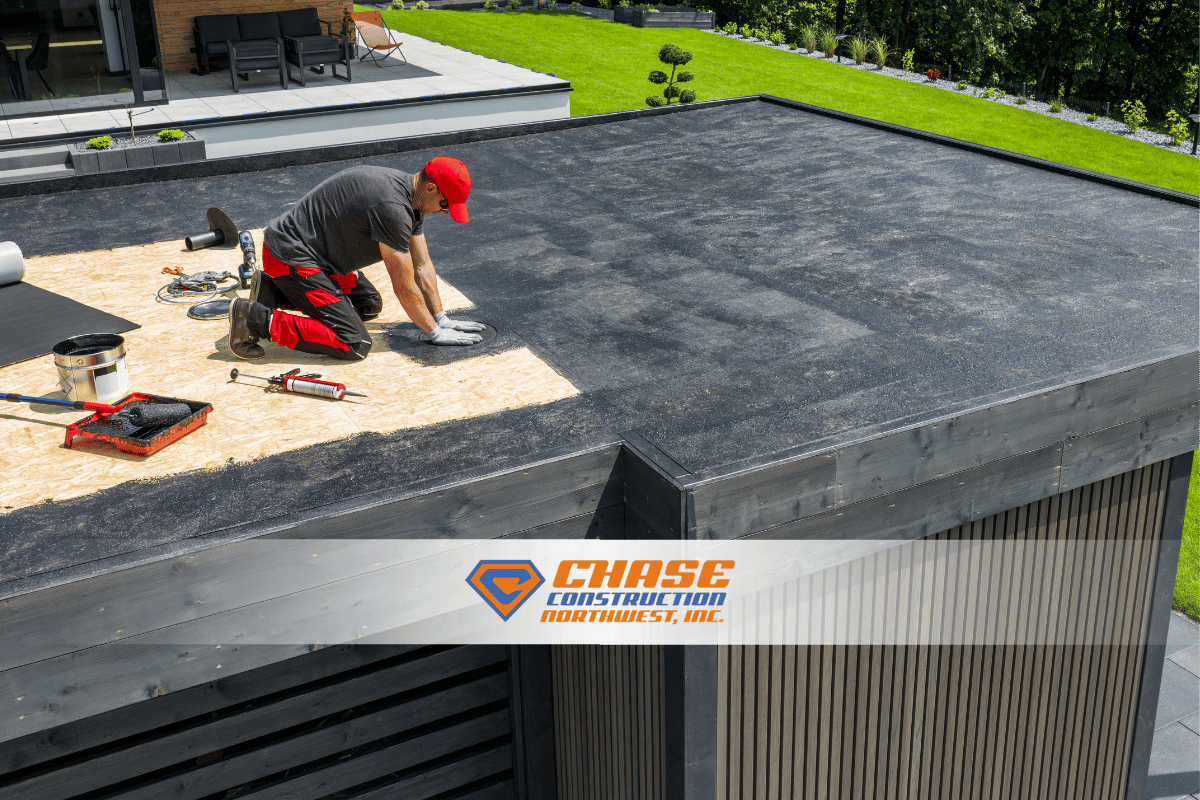
For low slope roofs, Chase Construction Northwest recommends stronger, more reliable roofing systems. As our team explains, “What we do recommend for low sloped roofs is gonna be either TPO, PVC or torch down.”
These systems are commonly used for flat and low slope roofs because they are designed to manage water more effectively than standard shingles or basic rolled roofing products.
TPO Roofing
TPO is a single-ply roofing membrane often used on low slope and flat roofs. It is known for durability, energy efficiency and strong waterproofing performance when installed correctly.
PVC Roofing
PVC is another single-ply membrane option. It is commonly used in commercial and specialty residential applications and offers excellent resistance to moisture and certain environmental conditions.
Torch Down Roofing
Torch down roofing is an asphalt-based membrane system designed for low slope roofs. It creates a durable waterproof surface and is often used where traditional shingles are not appropriate.
Each of these options may provide better protection than basic rolled roofing, depending on the structure and roof conditions.
Rolled Roofing Versus Shingles
Rolled roofing and asphalt shingles are very different products. Shingles are typically used on pitched residential roofs because they provide strong visual appeal, reliable performance and a wide range of color and style options.
Rolled roofing, on the other hand, is usually chosen for speed and affordability. It may cost less upfront, but it generally does not provide the same appearance or lifespan as shingles.
However, shingles are not always suitable for low slope areas. If your home has both pitched roof sections and low slope sections, you may need a combination of roofing systems. A professional inspection can determine which material belongs on each part of the roof.
Installation, Cost and Lifespan
Rolled roofing is often considered because it can be installed quickly and may cost less upfront than other roofing systems. However, the overall value depends on more than initial price.
Important factors include:
- Roof slope
- Drainage
- Existing roof condition
- Installation quality
- Weather exposure
- Maintenance needs
- Expected lifespan
In the Pacific Northwest, heavy rain, moss growth, falling debris and seasonal temperature changes can all affect roofing performance. A roofing system needs to be chosen with local conditions in mind.
When To Call Chase Construction Northwest
If you are trying to decide what type of roof is best for your home, Chase Construction Northwest can help you evaluate your options. Rolled roofing may come up in your research, but it is not always the best answer, especially for homes that need long-term protection.
As our team says, “If you have any questions about what type of roof would work best for your home, give us a call.”
Chase Construction Northwest can inspect your roof, review your slope and drainage conditions, and recommend the right system for your property. For many low slope roofs, that may mean TPO, PVC or torch down rather than rolled roofing.
Contact Chase Construction Northwest
If you have questions about rolled roofing, low slope roofing or the best material for your home, contact Chase Construction Northwest today.
Call 253-445-8950 or visit us online at chasenw.com.