What is an EPDM roof, and why do so many commercial buildings use one? It is a flexible, single-ply rubber membrane that protects flat and low-slope roofs from rain, sunlight, and temperature changes. For a warehouse, retail building, or low-slope section of a home in the Puget Sound area, EPDM can be a long-lasting option when its drainage, seams, and flashing are designed correctly.
Six Things Worth Knowing First
- EPDM is synthetic rubber, not a layer of asphalt or painted-on waterproofing.
- Common membrane thicknesses are 45, 60, and 90 mils.
- Roofers can fully adhere, mechanically attach, or ballast the membrane.
- Joints are sealed with specialized tape or adhesives, not ordinary heat welding.
- Proper drainage and flashing are just as important as the membrane itself.
- Repairs are often possible without replacing the entire roof.
What Is an EPDM Roof Made Of?
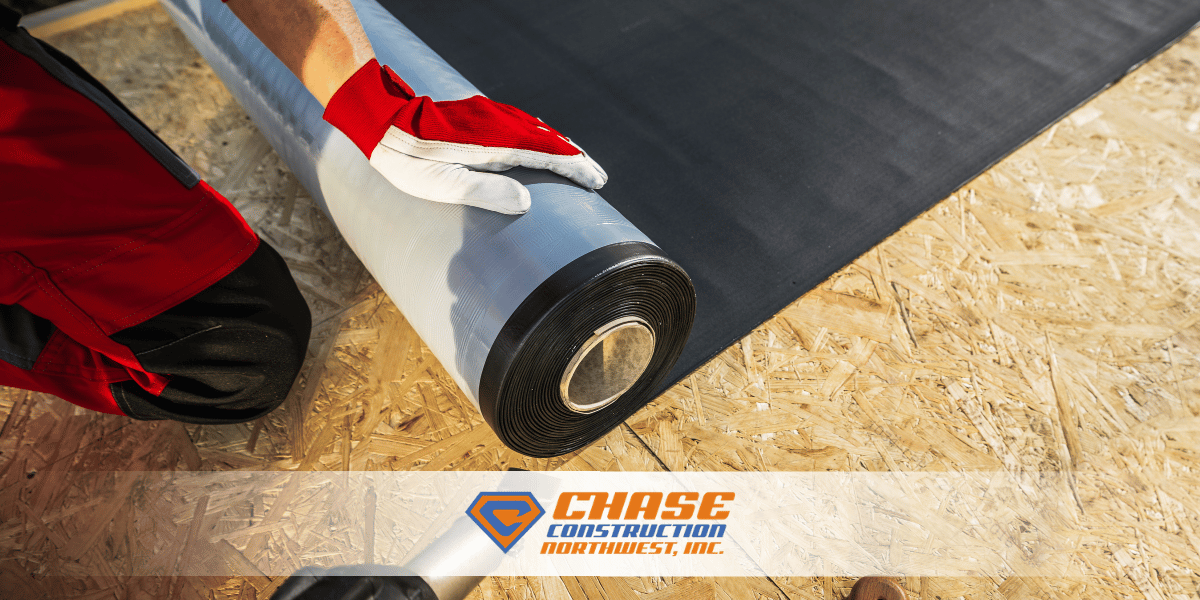
EPDM stands for ethylene propylene diene monomer; the finished material is an ethylene propylene diene terpolymer. In simpler terms, it is a synthetic rubber used as the waterproof outer layer of a roofing system. It remains flexible as temperatures change and resists weathering, UV exposure, and ozone.
A typical assembly includes the structural deck, insulation or cover board where needed, and a single layer of membrane. According to the EPDM Roofing Association, sheets are available in widths up to 50 feet, reducing the number of field seams on large surfaces.
Thickness matters. A 60-mil sheet is 0.060 inch thick, not 60 millimeters. Thicker material can improve puncture resistance, but it cannot compensate for poor detailing.
How Is EPDM Roofing Installed?
A good roof installation starts below the rubber. The contractor checks deck condition, insulation, slope toward drains, and the locations of vents, skylights, and equipment. Wet or deteriorated materials may need removal before new roofing goes down.
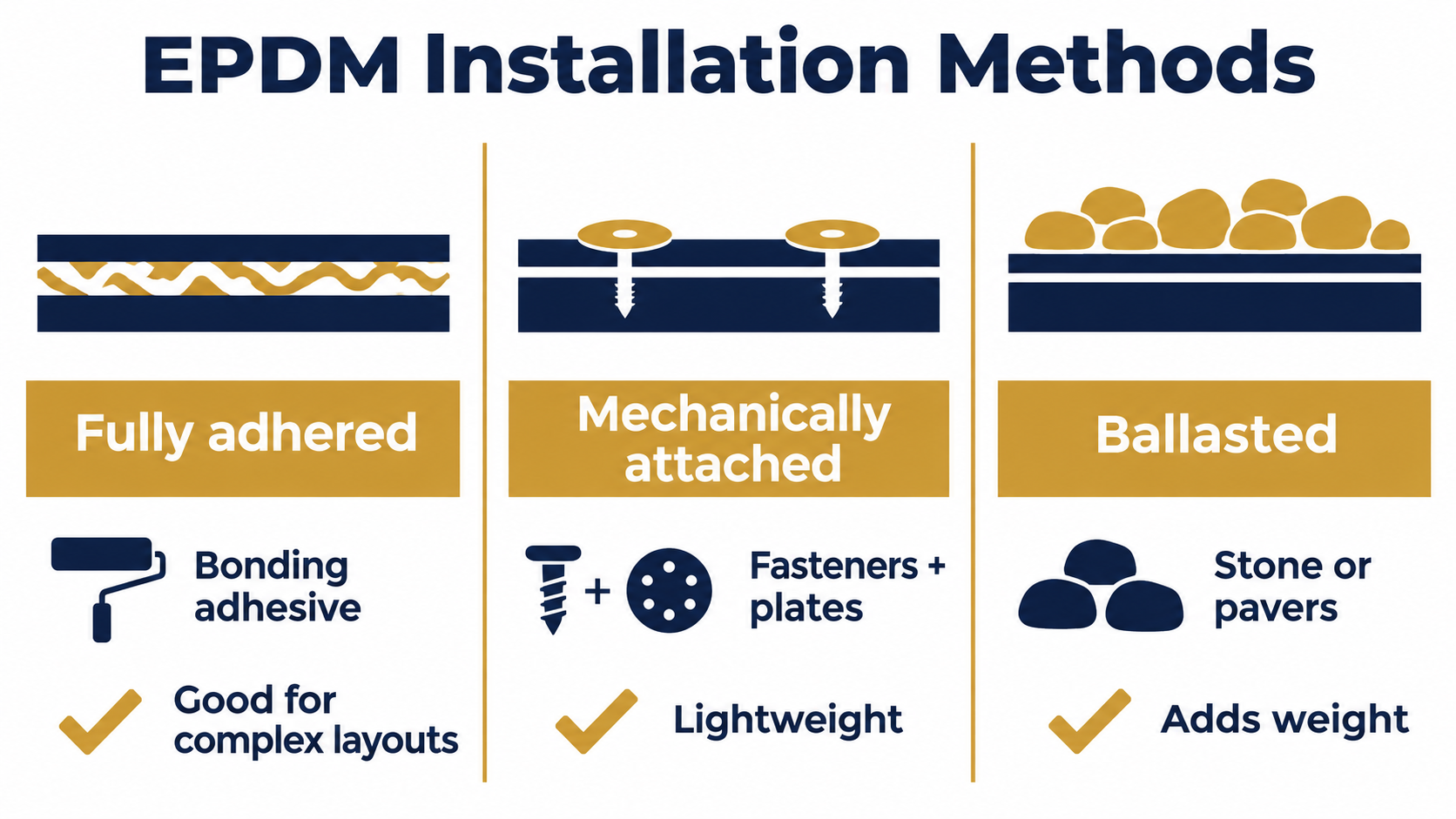
The three standard installation methods have different tradeoffs:
| Method | How It Stays in Place | Practical Consideration |
|---|---|---|
| Fully adhered | Bonding adhesive secures the membrane | Suits many complex roof layouts; needs suitable, dry surfaces |
| Mechanically attached | Fasteners and plates secure the assembly | Lightweight; fastening pattern must meet wind requirements |
| Ballasted | Stone or pavers hold loose-laid sheets | Adds significant weight; structure must be evaluated |
For many occupied buildings, access, weather windows, and protection of entrances also affect the installation plan. An EPDM design should reflect the building, not simply the lowest upfront bid.
Why Seams and Flashing Deserve Extra Attention
An EPDM membrane is durable, but the details around pipes, curbs, parapet walls, drains, and roof edges are where mistakes can lead to leaks. The edges of adjoining sheets must be joined correctly. Unlike TPO, which is commonly heat-welded, EPDM seams use approved adhesive or primer and seam tape, as explained in the industry’s seam guidance.
A warehouse roof with several HVAC units may require many more detail connections than an open roof of the same square footage. That changes the labor, risk, and inspection needs.
Worth Knowing: A Wide EPDM Sheet May Eliminate Field Seams Across Part of a Roof, but Drains, Equipment Curbs, and Perimeter Flashing Still Require Careful Waterproofing.
What Is an EPDM Roof Good For in Washington?
EPDM roofs are used on commercial buildings, apartment properties, warehouses, and low-slope residential additions. Their flexibility and resistance to weathering are useful in Puget Sound’s wet, changing conditions.
Black rubber absorbs more solar heat, while white EPDM reflects more sunlight. Neither color is automatically better for every property. As the U.S. Environmental Protection Agency explains, reflective roofs can reduce cooling loads, but performance depends on climate and building design. Insulation, ventilation, heating needs, and local requirements belong in the decision.
The bigger concern during a rainy season is persistent standing water. A flat roof should still have positive drainage. Rubber is a waterproofing material, not a substitute for properly pitched drains and clear outlets.
How Long Does This Rubber Roofing Last?
The answer depends on the assembly, weather exposure, installation workmanship, and ongoing care. The EPDM Roofing Association’s updated service-life research identifies an expected 38-year service life for properly designed, installed, and maintained membranes. Some roofs have performed longer, but 38 years is not a promise for every building or a standard warranty.
For better performance, schedule professional inspections in spring and fall and after significant storms. Keep drains clear, document new rooftop equipment, and address damaged flashing before water reaches insulation.
Practical Tip: After Heavy Rain, Record Where Water Remains Around Drains and Rooftop Equipment. Repeated Ponding Is a Reason to Investigate Drainage, Even if There Is No Ceiling Stain Yet.
When Is Repair Better Than Roof Replacement?
A localized puncture, loose flashing detail, or failed seam may be suitable for repair if the surrounding membrane and insulation are sound. A contractor can clean and prepare the area, apply a compatible patch, and inspect the adjoining details.
Widespread trapped moisture, recurring leaks across different areas, or a deteriorated deck may point toward roof replacement. Covering wet material with a new layer can hide damage rather than solve it.
Ask for an assessment that separates the source of the leak from where water appears indoors. Water can travel along the underside of a roof assembly before finding its way into a room.
EPDM Solutions Built Around Puget Sound Properties
At Chase Construction North West, Inc., we install, maintain, and repair EPDM roofing for commercial and low-slope properties. Our approach starts with checking the existing assembly, drainage, and detail locations before recommending whether a targeted repair, recovering an eligible roof, or full replacement makes sense.
When you move beyond asking “what is an EPDM roof?” and start planning a project, those details matter. Our factory-trained team works with single-ply roofing systems and can explain membrane thickness, attachment options, and manufacturer warranty terms for your particular building. A professional assessment is especially useful when leaks return after patching, insulation may be wet, or rooftop equipment has been added.
Why Choose Chase Construction North West, Inc.?
- Family-owned roofing company serving Puget Sound since 2002.
- Licensed, bonded, and insured, with Washington contractor registration CHASECN981NN.
- Commercial crews trained to install and repair EPDM and other roofing systems.
- Authorized Versico contractor for low-slope membrane systems.
- Access to qualifying Versico systems with 20-year no-dollar-limit warranty options.
- Free, no-obligation estimates to help property owners compare solutions.
Plan Your EPDM Roofing Project
From Tacoma, Puyallup, and Edgewood to Seattle, Kent, Bellevue, and nearby Puget Sound communities, we help property owners make informed roofing decisions. If you are considering installation, roof repair, or a full replacement, get in touch with our team to discuss your property and arrange an assessment.
Frequently Asked Questions
Can EPDM Be Installed Over an Existing Roof?
Sometimes, if the existing assembly is dry, structurally suitable, and approved for a recover system. An inspection is needed before choosing this option.
Can You Walk on EPDM Roofing?
Yes, for occasional maintenance with appropriate precautions, but it is not intended as an everyday walking surface. Walkway pads may be needed near regularly serviced equipment.
Does EPDM Require a Protective Coating?
No, a properly specified EPDM membrane generally does not need a coating to function. Any future coating should be compatible with the manufacturer’s system and warranty.
Can EPDM Be Installed During Rain?
No, bonding and seam preparation generally require suitable dry conditions. Weather windows, temperature, and adhesive instructions determine when crews can proceed.
Is EPDM Suitable for a Residential Flat Roof?
Yes, it can protect a flat or gently sloped residential section when the assembly is properly designed. Drainage, penetrations, and the connection to adjoining steep-slope roofing need special attention.