If you are wondering what to expect during roof replacement, picture a few busy days rather than weeks of chaos. There will be noise, crews moving around the property, old roofing coming down, and plenty of activity overhead. But with a well-organized roofing team, each stage follows a clear sequence and your home stays protected throughout the process.
Knowing what is normal also makes it easier to recognize when something deserves a question. Here is what homeowners should expect before the first shingle comes off and through the final cleanup.
What The Project Will Actually Feel Like
Most homeowners notice the disruption more than the roofing work itself. A typical residential replacement may take about one to three days, while larger, steeper, or more complicated roofs can take longer.
Expect:
- A material delivery and work vehicles near your home
- Significant noise during tear-off and installation
- Vibrations that can travel through ceilings and walls
- Roofing debris around designated work areas
- Limited access to portions of the driveway or yard
- A final cleanup and inspection before the crew leaves
Weather, roof size, roofing material, access, and hidden damage beneath the old roof can all change the schedule.
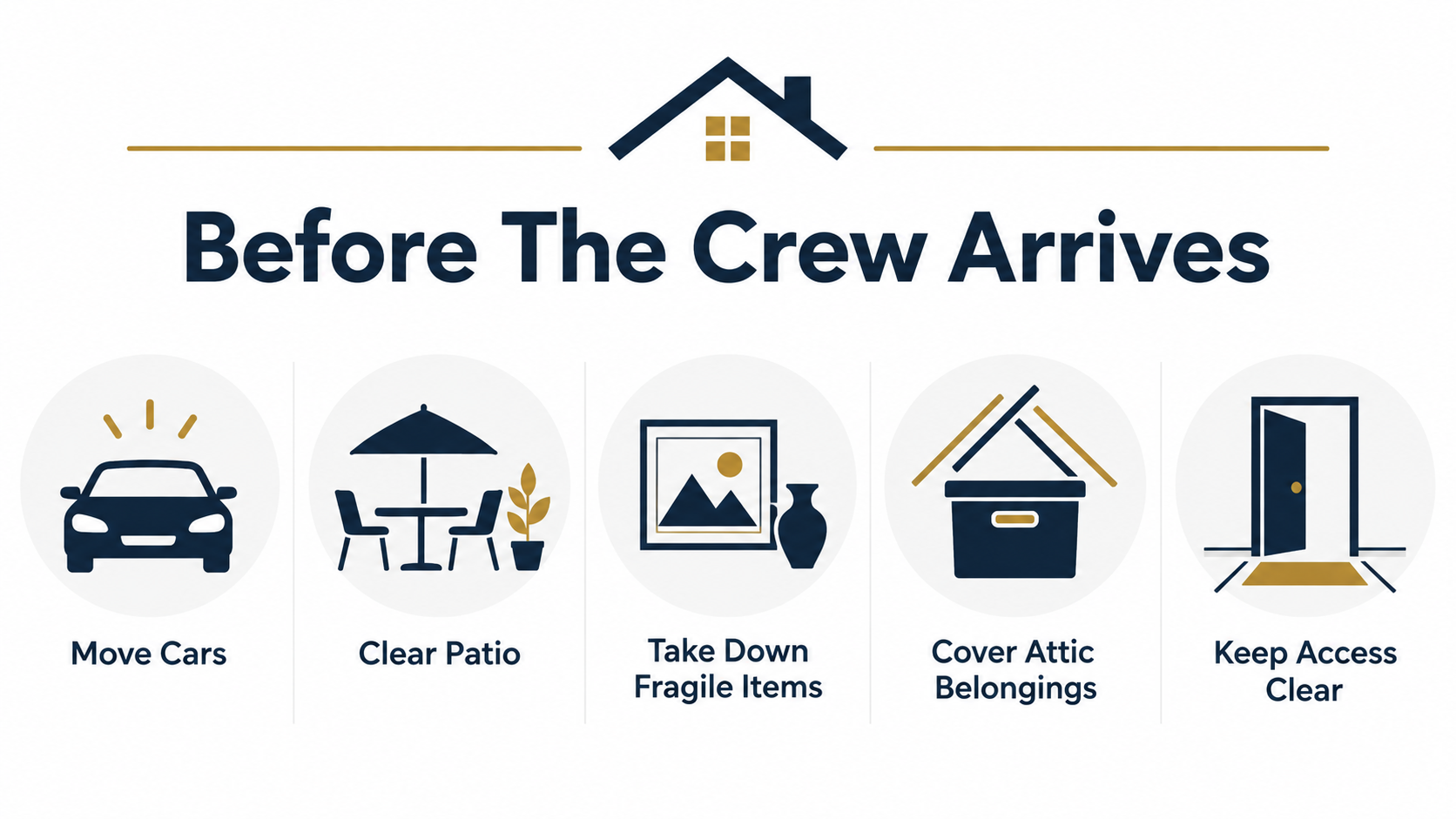
Before The Crew Arrives
Good preparation makes installation day easier for everyone.
Move vehicles away from the house before work begins so they are protected from falling debris and do not block material delivery. Patio furniture, grills, planters, children’s toys, and other movable items should also be cleared from the immediate perimeter.
Inside the home, take down fragile wall decorations, especially on the upper floor. Roof tear-off and fastening create vibration, and lightweight frames or unsecured decorations can shift.
If you store valuables in an unfinished attic, cover them. Small amounts of dust or debris can sometimes fall through gaps in older roof decking during tear-off.
This is also a good time to verify who is working on your property. Washington homeowners can check contractor registration, bond, insurance, workers’ compensation information, and other records through the Washington State Department of Labor & Industries contractor verification service.
What Happens Once Roof Replacement Starts?
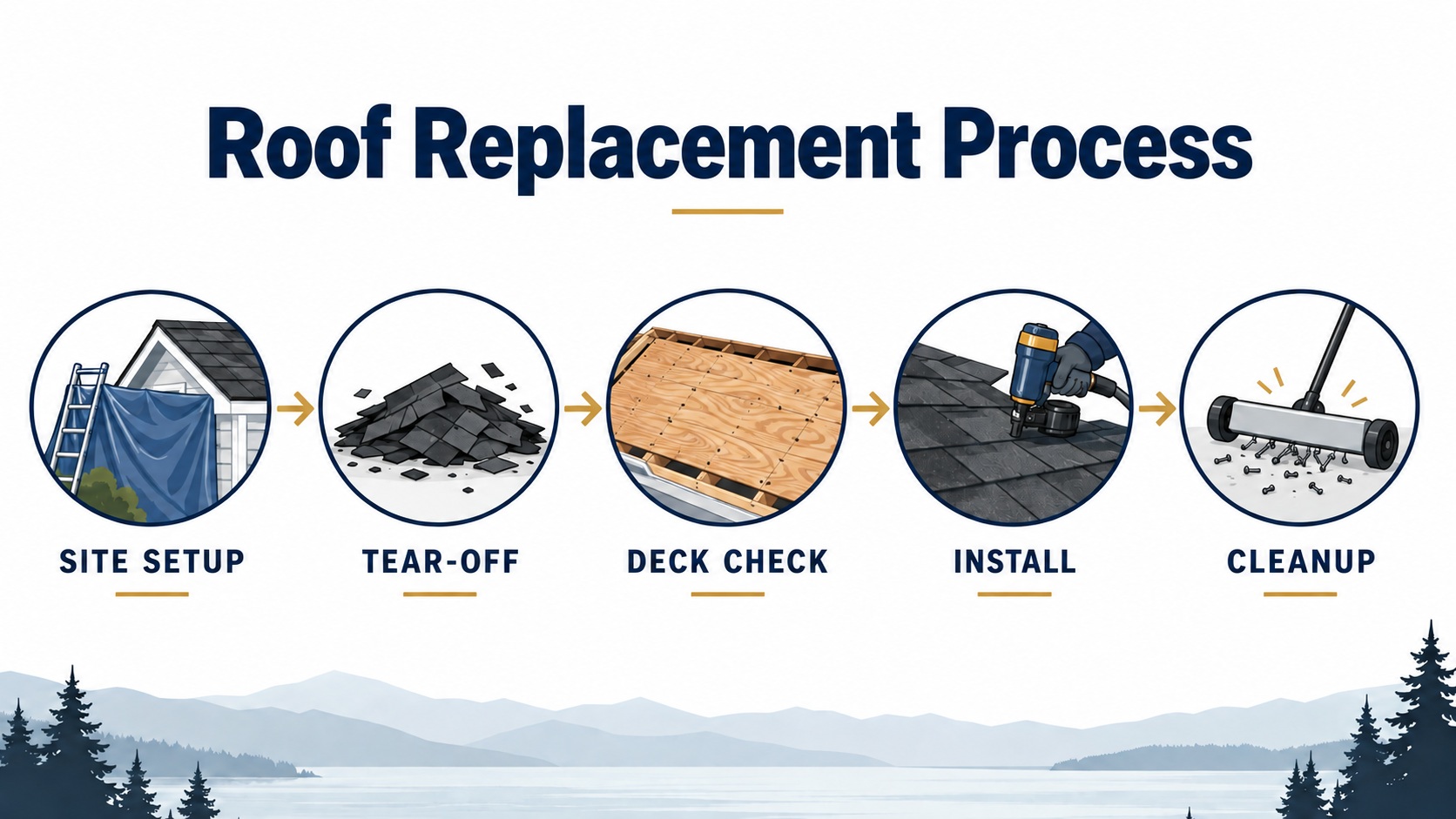
The exact sequence varies by roof, but the major stages are fairly consistent.
| Stage | What You May Notice | What Is Happening |
|---|---|---|
| Site Setup | Tarps, ladders, equipment | Property and work areas are prepared |
| Tear-Off | Loud scraping and debris | Old roofing is removed |
| Deck Inspection | Temporary pause in installation | Exposed wood is checked for damage |
| Roof System Installation | Hammering and crew movement | Underlayment, flashing, ventilation, and roofing are installed |
| Cleanup | Ground crews around the property | Debris and loose fasteners are collected |
The tear-off stage is usually the loudest. Old shingles, underlayment, flashing, and other materials must be removed carefully enough to expose the roof deck underneath.
That exposed deck is important because it reveals problems that could not be seen from above.
Hidden Decking Damage Can Change The Job
One of the most important things to understand about what to expect during roof replacement is that the final condition of the wood deck cannot always be confirmed until the old roofing is removed.
Soft plywood, rot, moisture damage, or deteriorated boards should not simply be covered by a new roof. Damaged sections need to be replaced so the new roofing system has a sound fastening surface.
That can add labor, materials, and time to the project, but covering damaged decking would only hide the problem under an expensive new roof.
Practical Tip: Ask Before The Job Begins How Unexpected Decking Replacement Will Be Documented, Priced, And Approved. That Prevents A Legitimate Repair From Becoming An Unexpected Billing Surprise.
Then The New Roofing System Goes On
A quality replacement is more than new shingles.
After the deck is ready, the crew installs the components required for the roofing system. Depending on the home and material, that can include moisture protection, underlayment, drip-edge details, flashing, starter materials, shingles or another roof covering, ridge components, and ventilation.
Pay particular attention to flashing around chimneys, skylights, walls, valleys, vents, and other roof penetrations. These transition areas require careful detailing because they are common places for water to find an opening.
Ventilation deserves attention too. ENERGY STAR’s attic ventilation guidance explains how appropriate attic airflow can help control heat and moisture and support a more durable roof and attic assembly.
Can You Stay Home During Roof Replacement?
Yes, in many cases you can stay home, but expect considerable noise and vibration.
Working from home can be difficult during tear-off and fastening. Young children and pets may also be more comfortable elsewhere during active construction.
Stay away from ladders, dumpsters, material-staging areas, and the perimeter directly below roof work. Roofing is construction work, and safety procedures matter. OSHA’s residential fall-protection guidance generally requires fall protection for residential construction workers exposed to falls of 6 feet or more.
You should also coordinate with the crew before entering or leaving through doors close to the active work area.
Safety Tip: Never Walk Through An Active Debris-Drop Zone Just Because The Doorway Or Driveway Normally Belongs To You. Let The Crew Know You Need Access First.
Cleanup Is Part Of The Roof Replacement
A roof replacement is not finished when the final shingle is fastened.
Old roofing, packaging, flashing scraps, fasteners, and other materials need to leave the property. Crews commonly inspect the ground and use magnetic collection tools to help locate loose nails.
Even after a thorough cleanup, it is sensible to watch the driveway and lawn over the next several days, especially before allowing children or pets into areas that were close to the work.
Roofing debris does not necessarily have to become landfill waste. The U.S. Environmental Protection Agency notes that recycled asphalt shingles can be used in applications such as asphalt paving and road materials.
What To Expect From Chase Construction North West
When homeowners understand what to expect during roof replacement, the process becomes much easier to plan around. Chase Construction North West, Inc. has served roofing customers throughout the Puget Sound region since 2002, with residential roofing built around complete roofing systems, manufacturer specifications, customer communication, and long-term protection.
The team is factory trained and certified, and Chase evaluates the existing roof, roof deck, ventilation, materials, and other system components instead of treating replacement as simply putting new shingles over a house. That matters when tear-off exposes damaged wood, outdated details, or ventilation concerns that need to be addressed before installation continues.
Homeowners considering replacement should bring in a professional when leaks are recurring, roofing materials are extensively worn, storm damage is widespread, or the existing roof is approaching the end of its useful service life.
Why Homeowners Choose Chase
- Serving Puget Sound roofing customers since 2002 and remaining family owned
- Licensed, bonded, and insured Washington contractor, license CHASECN981NN
- GAF Master Elite certified since 2011
- Factory-trained and certified roofing installers
- Published coverage of up to a 50-year lifetime material warranty and 25-year workmanship warranty
- Company review page currently lists 16 reviews with an average 5-star rating
Ready To Plan Your Roof Replacement?
If your roof is worn, leaking, storm damaged, or simply reaching the point where repairs are no longer practical, knowing what to expect during roof replacement is the first step toward making the project easier.
Chase serves homeowners throughout Pierce, King, and Thurston counties and communities across the Puget Sound region. When you are ready to understand your roof’s condition, replacement options, and project timeline, get in touch for a professional estimate.
Frequently Asked Questions
Do I Need To Empty My Attic Before Replacing The Roof?
Usually not, but covering stored belongings is sensible because dust and small debris can sometimes enter an unfinished attic during tear-off.
Will Roofers Need Access Inside My House?
Not always. Interior or attic access may be needed when the contractor wants to inspect ventilation, moisture, structural concerns, or areas connected to an existing leak.
What Happens If It Rains During Roof Replacement?
Work may pause when conditions make installation unsafe or could expose the roof system to moisture. Professional crews plan the tear-off and temporary protection around weather conditions.
Can Roof Replacement Damage Gutters Or Landscaping?
Roofing work creates falling debris and heavy activity, so contractors should plan how gutters, siding, landscaping, windows, and other vulnerable areas will be protected before tear-off begins.
Should I Tell My Neighbors Before Roof Replacement Starts?
It is a good idea. Letting nearby neighbors know about temporary noise, trucks, and construction activity can prevent unnecessary frustration, especially when homes are close together.
How Will I Know The Roof Replacement Is Finished Properly?
Review the completed work, cleanup, warranty documentation, ventilation and flashing details, and any changes made during installation before considering the project complete.