Kirkland roof drains play an important role in moving rainwater away from your roof and protecting the structure below it. When drains clog, deteriorate, or no longer move water efficiently, standing water can put unnecessary stress on the roofing system and eventually contribute to leaks and water damage. Chase Construction North West, Inc. provides experienced roofing service for Kirkland homes and commercial properties, with a focus on finding the actual source of drainage problems and building roofing solutions that perform over time.
What Kirkland Property Owners Should Know
- Roof drains need a clear, properly designed path for water to leave the roof.
- Ponding water can point to a clogged drain, poor roof slope, damaged components, or another drainage problem.
- The drain, membrane, flashing, gutter, downspouts, and surrounding roof should be evaluated together.
- Regular roof maintenance can catch drainage problems before they cause larger repairs.
- Flat and low-slope commercial roofing systems often depend heavily on internal drains and overflow routes.
- Kirkland’s wet climate makes routine inspection and debris removal especially important.
Why Roof Drainage Matters in Kirkland
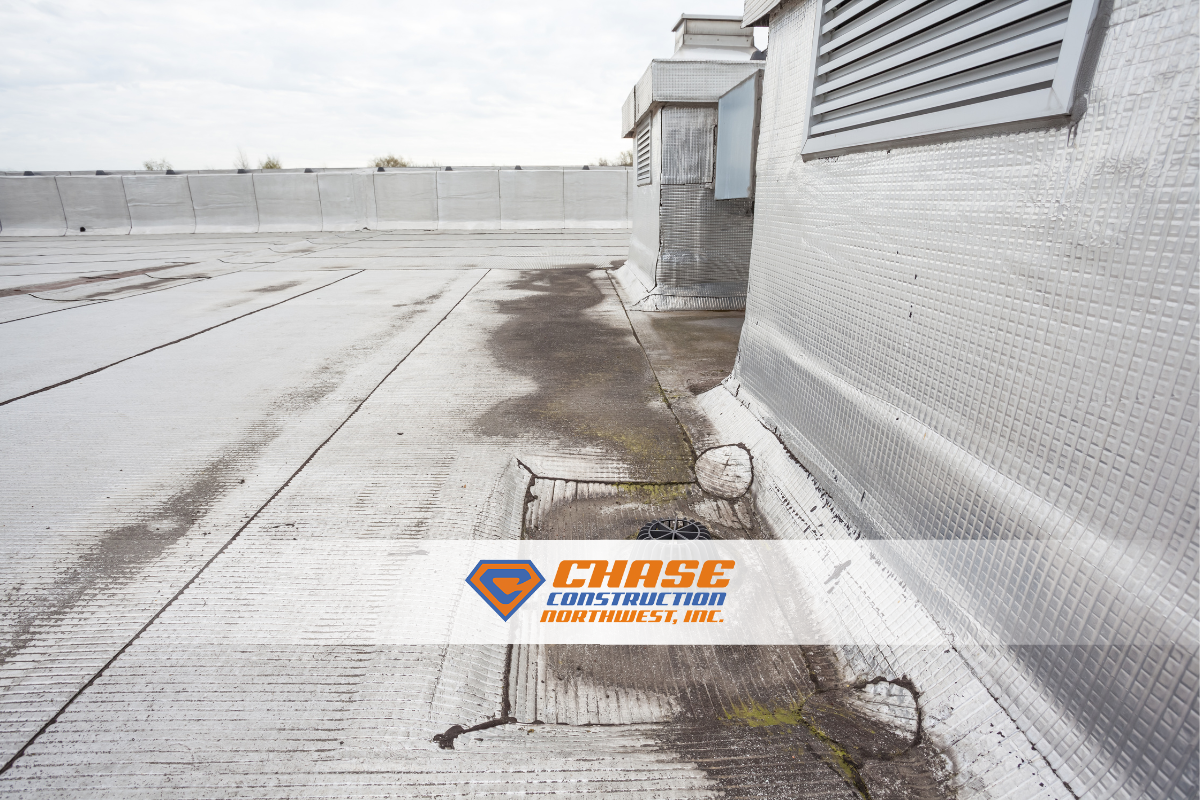
Kirkland receives frequent rainfall, and roofs need to manage that water consistently. Leaves, pine needles, dirt, and other debris can collect around a drain or gutter and gradually restrict water flow. Once that happens, water can remain on the roof instead of moving through the intended drainage system.
The City of Kirkland’s drainage guidance recommends keeping gutters, downspouts, and private drainage features clear of leaves and debris. The city also notes that property owners are responsible for maintaining drainage structures on their property.
For a roofing system, that maintenance matters because repeated ponding can expose weak seams, flashing, penetrations, and other vulnerable areas to moisture for longer periods.
What Happens When a Roof Drain Stops Working Properly?
Water can begin pooling around the drain or in low areas of the roof.
A small drainage issue does not always produce an immediate interior leak. Over time, however, retained water can contribute to membrane deterioration, saturated insulation, damaged decking, or moisture entering the property.
That is why simply waiting for the water to disappear is not always the right approach.
What Does Roof Drain Service Include?
Proper Kirkland roof drains service should look beyond the visible drain opening. The goal is to determine why water is not moving correctly and whether any surrounding roofing materials have already been affected.
Inspecting the Roof and Drain Area
The first step is checking where water is collecting and how it is supposed to leave the roof. This may include inspecting the drain body, strainer, membrane connection, flashing, seams, scuppers, gutter areas, and visible downspouts.
The surrounding roof surface also matters. A perfectly open drain cannot solve ponding if the roof does not direct water toward it.
Finding the Source of Slow Drainage
Debris is a common cause, but it is not the only one. Slow drainage may also result from damaged drain components, poor slope, restricted piping, deteriorated roofing materials, or an improperly functioning system.
Identifying the cause first helps avoid performing the same temporary cleanup every time it rains.
Repairing the Drain and Roofing Connection
When damage is found, the required work depends on its location and severity. A job may involve clearing drainage points, repairing flashing or membrane around the drain, replacing damaged drain components, or correcting another roofing problem that is interfering with water flow.
For commercial roofing, the condition of the surrounding membrane and insulation should also be considered if water has been sitting on the roof for an extended period.
Signs Your Roof Drainage System Needs Attention
| What You Notice | What It May Mean |
|---|---|
| Water remains on the roof after rain | Restricted drainage, poor slope, or a low area |
| Debris collects around the drain | Water flow may become restricted |
| Water reaches an overflow or scupper regularly | The primary drainage route may not be keeping up |
| Interior staining near a drain area | The drain connection, roofing, or piping may be leaking |
| Gutters overflow during moderate rain | Debris, poor flow, or another gutter problem may be present |
| The same area repeatedly ponds | The issue may involve roof slope rather than a simple clog |
Recurring symptoms deserve closer inspection. Clearing debris can solve a straightforward blockage, but repeated ponding usually means there is something else to investigate.
Roof Drains, Gutters, and Downspouts Are Not the Same
Different properties move water in different ways.
A gutter collects water along the roof edge and directs it toward downspouts. An internal roof drain typically sits at a low point and moves water through piping inside or beneath the building. A scupper allows water to pass through an opening along a parapet or roof edge.
Some Kirkland properties use a combination of these features.
Understanding which system your property has is important because the repair method changes accordingly. A roofing gutter problem may involve debris or edge drainage, while an internal drain issue can involve the drain body, membrane connection, piping, slope, or overflow system.
Can Standing Water Damage a Roof?
Yes. Persistent standing water can increase stress on roofing materials and expose vulnerable areas to moisture for longer periods.
Not every small amount of water indicates a serious failure. However, large areas of ponding, water that remains for an extended period, or ponding that repeatedly appears in the same place should be inspected.
For Kirkland properties, seasonal debris and regular rainfall make preventive roofing maintenance particularly valuable.
Why the Drain-to-Roof Connection Matters
A roof drain is only effective when it is properly integrated into the surrounding roofing system.
On flat and low-slope roofs, membranes and flashing must form a dependable connection around the drain. If that connection deteriorates, water may enter the assembly even when the drain itself is flowing.
Moisture beneath the surface may then affect insulation or the roof deck before the problem becomes obvious inside the building.
Are There Requirements for Roof Drainage in Washington?
Roof drainage design can be affected by building and plumbing requirements, particularly when drains are being installed, replaced, resized, or substantially altered.
The Washington State Building Code Council’s plumbing code information provides the state’s current plumbing code amendments and adoption information. Depending on the property and scope of work, requirements may address primary drainage, secondary or overflow drainage, and how water is discharged.
Major drainage changes should therefore be evaluated before work begins rather than assuming the existing design can simply be duplicated.
Protect Your Kirkland Roof Before Drainage Problems Spread
A reliable drainage system protects more than the surface of your roof. It helps prevent water from reaching insulation, decking, walls, ceilings, and other parts of your property.
Chase Construction North West brings decades of roofing experience to properties throughout the Puget Sound region. In addition to Kirkland, the company works with customers in communities across King and Pierce counties, including Seattle, Bellevue, Redmond, and surrounding Western Washington areas.
If you are noticing ponding, recurring leaks, clogged drainage areas, or another roof concern, get in touch with Chase Construction North West to arrange an evaluation and determine what your roof actually needs.
Frequently Asked Questions
How much does roof drain repair cost in Kirkland?
The cost depends on the cause of the problem and the amount of roofing work required. A simple blockage is very different from replacing a damaged drain or repairing membrane and insulation affected by water.
How long does roof drain repair take?
Minor drainage work may be completed relatively quickly, while drain replacement, roofing repairs, or slope corrections can require more time. An inspection helps establish the expected scope before the job begins.
How often should Kirkland roof drains be checked?
Roof drains should be inspected regularly and after periods of heavy debris or severe weather. Properties surrounded by mature trees may need more frequent cleaning because leaves and needles can quickly restrict drainage.
Can I clean a clogged roof drain myself?
Loose surface debris may be removed when the roof can be accessed safely, but recurring clogs, leaks, damaged components, or significant ponding should be evaluated professionally.
Why does water keep pooling even after the drain is cleaned?
The problem may be related to roof slope, a low area, restricted piping, or another part of the drainage system rather than the drain opening itself. Repeated ponding is a reason to inspect the complete system.
Do Kirkland roof drains need overflow drainage?
Some roof designs require a secondary drainage or overflow route in case the primary system becomes blocked or cannot handle the water volume. The appropriate setup depends on the building and applicable code requirements.
Other Services We Offer in Kirkland:
- Asphalt Shingles
- Attic Insulation
- Carports
- Carports & Metal Car Shelter Installation
- Commercial Roofing
- Composite Roofing
- Dec-Tec Water Proof Decking
- EPDM Roofing
- Flat Roofing
- Low Slope Roofing
- Metal Roof Repair
- Metal Roofing
- Painting and Siding
- PVC Roofing
- Residential Roofing
- Roof Cleaning
- Roof Drains
- Roof Inspections
- Roof Maintenance
- Roof Repair
- Roof Replacement
- Roofers
- Roofing
- Roofing Company
- Roofing Contractor
- Silicone and Elastomeric Roof Coating
- Skylights
- Slate Roofing
- Torchdown Roofing & Modified Bitumen Roofing
- TPO Roofing
Find Roof Drains Near Me:
Read More:
Will Hail Damage A Metal Roof?

What Color Metal Roof Is The Most Energy Efficient?
How Do I Find Out How Old My Roof Is?

How To Attach A Patio Roof To An Existing House?