Kirkland Torchdown Roofing & Modified Bitumen Roofing gives low-slope residential and commercial roofs a durable, layered waterproofing system built for Pacific Northwest conditions. At Chase Construction North West, Inc., we inspect the existing roof, drainage, substrate, and vulnerable details before recommending repair, replacement, or a new low-slope system. The goal is not simply to cover the building. It is to create an assembly that manages water, movement, and long-term exposure correctly.
What to Know Before Choosing This Roofing System
- Torch-down is used on many flat and low-slope roofs.
- Performance depends on the roof deck, drainage, membrane layers, flashing, and correct torch technique.
- The system can work for commercial roofing and certain residential low-slope projects.
- Standing water, failed seams, wet materials, and damaged decking should be addressed before new work begins.
- Torch use involves an open flame, so training, site preparation, and fire-safe methods matter.
- Inspection should come before material selection because not every building needs the same system.
Is Torchdown Roofing Right for a Kirkland Flat Roof?
Torchdown can be a strong option when a low-slope roof needs a flexible waterproof membrane and the building is suitable for a heat-applied system.
What the Membrane System Actually Does
Modified bitumen combines asphalt-based bitumen with polymer reinforcement to create a flexible membrane. Depending on the system, it may use a base ply, additional reinforced layers, and a mineral-surfaced cap sheet.
That layered construction matters on a flat roof because water leaves the surface more slowly than it does on a steep roof. The membrane, seams, penetrations, curbs, edges, and drains need to work together. Weak flashing or trapped moisture can undermine even good roofing materials.
Where Torch-Down Systems Make Sense
Kirkland Torchdown Roofing & Modified Bitumen Roofing is often considered for commercial properties, garages, additions, porches, and other low-slope sections where shingles are not appropriate. It can also be a practical reroofing choice when the existing assembly supports this application.
A roofing contractor should evaluate the deck, old membrane, insulation, drainage, penetrations, and surrounding materials before deciding whether a roofing torch should be used.
How Does a Torch-Down Roof Project Work?
A proper project starts with the existing roof, not with a new roll of material.
Inspect the Deck, Drainage, and Existing Materials
We check for soft decking, trapped moisture, failed flashing, ponding areas, blocked drainage, and materials that should not remain under the new system. This is also when we determine whether repair is enough or replacement gives the property a better long-term result.
Build the Low-Slope Membrane Assembly
The exact installation depends on the roof configuration and manufacturer requirements. A typical assembly may include a base sheet or ply, another membrane layer, and a cap sheet that forms the finished weathering surface.
| System approach | Method | Typical consideration |
|---|---|---|
| Torch-applied modified bitumen | Heat bonds the sheet | Low-slope roofs suited to flame use |
| Self-adhered membrane | Factory-applied adhesive | Areas where open flame is not preferred |
| Multi-ply system | Multiple reinforced membranes | Added redundancy and durability |
Control the Torch, Heat, and Seams Carefully
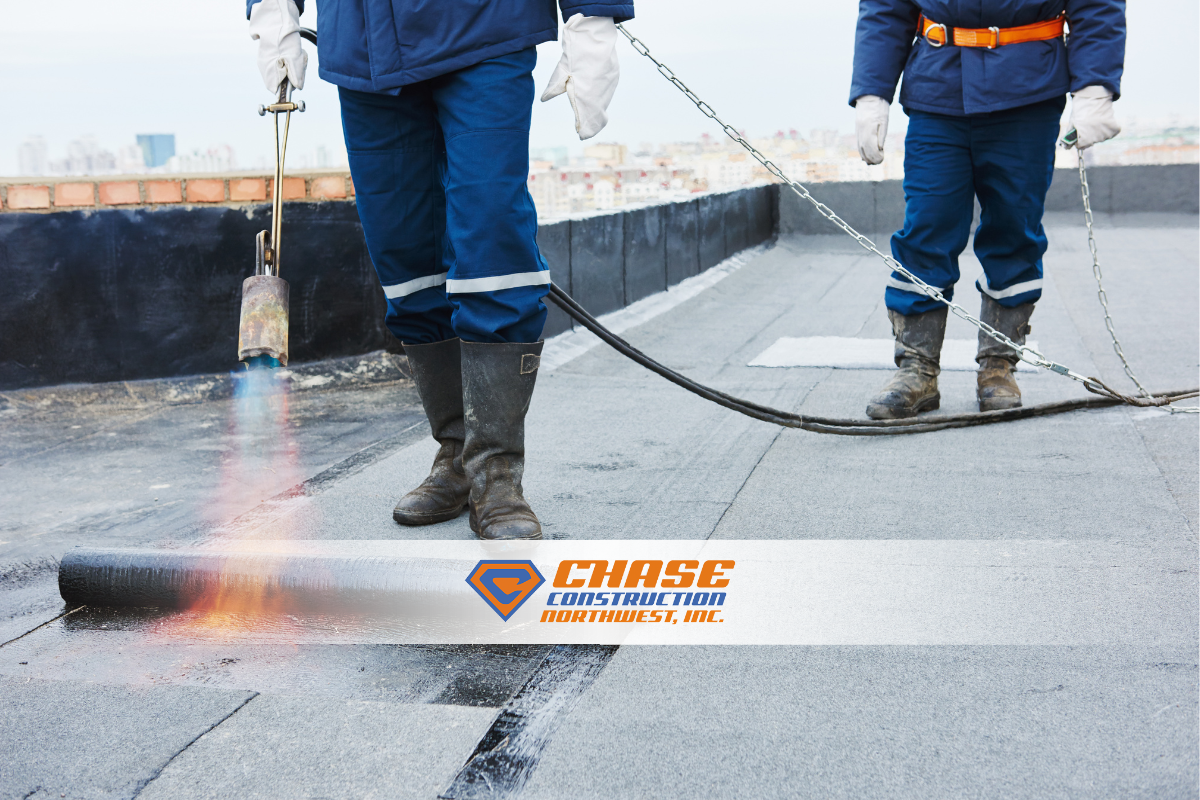
With torch-down roofing, controlled heat activates the underside of the sheet so it bonds correctly. Too little heat can leave poor adhesion, while careless torch use can create serious fire risk around combustible roof components.
The National Roofing Contractors Association’s CERTA guidance highlights the importance of proper training and safety procedures when roofing work involves open-flame torch applications. The roof deck and nearby materials should always be understood before roofing torch work begins.
Finish the Details That Keep Water Out
The field membrane is only part of the system. Flashings, wall transitions, drains, penetrations, edges, seams, and equipment curbs often determine whether a roof performs well over time.
These details are especially important on low-slope roofs because water does not move away from the building as quickly as it does on a steep roofing system.
What Should Be Fixed Before New Bitumen Roofing Goes On?
Installing new roofing over an unresolved problem can shorten the life of the entire system. Before work starts, we look for wet insulation, damaged decking, poor slope, recurring ponding water, cracked surfaces, loose seams, and failing flashings.
Drainage deserves special attention in Western Washington. A roof that repeatedly holds water needs more than a fresh surface. The cause should be identified so the new roof is not expected to compensate for a drainage problem it cannot correct.
When Is Repair Better Than Replacement?
A localized split, seam issue, or flashing defect may be repairable when the surrounding roofing is still sound. Widespread deterioration, repeated leaks, saturated materials, or an aging membrane can make replacement the more dependable option.
Kirkland Torchdown Roofing & Modified Bitumen Roofing should be selected around the actual condition of the roof, not simply because the material is durable.
Why the Existing Roof Matters
The condition beneath the visible membrane can change the entire project. Moisture trapped in insulation, deteriorated decking, poor attachment, or several previous roofing layers may require additional work before a new membrane can be installed correctly.
An inspection also helps determine which application methods and roofing materials are appropriate for the building.
Local Roofing Details Kirkland Property Owners Should Know
Kirkland’s wet fall and winter conditions make drainage, flashing, and waterproofing particularly important for flat and low-slope roofing. Leaves, debris, prolonged rainfall, and slow-moving roof water can expose weak seams or drainage problems that may remain unnoticed during drier months.
Roof installation and replacement projects may also be subject to local permitting requirements depending on the scope of the work. The City of Kirkland Development Services Center provides current information about permits, inspections, and building requirements.
Structural changes, insulation work, new penetrations, rooftop equipment, or other modifications can affect what is required. Evaluating the property before ordering materials helps prevent surprises once installation begins.
Why Installation Quality Matters With Modified Bitumen
Modified bitumen is a proven roofing material, but product quality alone does not determine performance. The membrane must be compatible with the roof design and installed with close attention to seams, overlaps, penetrations, flashing, and drainage.
Torch application adds another level of responsibility because heat and flame must be carefully controlled. Proper preparation protects both the roofing system and the surrounding building materials.
The result should be a complete roofing assembly rather than individual sheets installed without considering how water moves across the roof.
Get a Roof System Built for the Property
For Kirkland Torchdown Roofing & Modified Bitumen Roofing, Chase Construction North West brings practical low-slope roofing experience and a system-first approach. Our roofing services support property owners in Kirkland and nearby Puget Sound communities, including Bellevue, Redmond, Seattle, and surrounding areas.
If your flat or low-slope roof is leaking, aging, or due for replacement, get in touch with Chase Construction North West to discuss the condition of your roof. We can inspect the existing system, explain suitable options, and help you determine whether repair, replacement, or a new modified bitumen system makes the most sense.
Frequently Asked Questions
How much does torchdown roofing cost in Kirkland?
The cost depends on roof size, access, tear-off requirements, deck repairs, insulation, membrane configuration, flashing complexity, and the number of roofing layers needed.
An inspection is usually necessary before an accurate price can be provided because hidden moisture or damaged materials can change the scope of work.
How long does a torch-down roof installation take?
Many projects can be completed within several working days, but roof size, weather, drying conditions, repairs, access, and project complexity can affect the schedule.
Larger commercial roofing projects or roofs requiring substantial deck repair may take longer.
Can torch-down roofing go over an existing roof?
Sometimes, but only when the existing roof, moisture condition, deck, attachment, and roofing system allow a recover application.
Installing over damaged or saturated materials can trap existing problems beneath the new membrane.
Is torchdown roofing only for commercial properties?
No. Torch-down roofing is common in commercial applications, but it can also be used on suitable residential garages, additions, porches, and other low-slope roof sections.
The roof design and surrounding materials should determine whether torch application is appropriate.
Does a modified bitumen roof need maintenance?
Yes. Periodic inspection can identify drainage problems, damaged flashing, punctures, open seams, or surface deterioration before they develop into larger leaks.
Keeping drains and roof surfaces clear of debris is also important on low-slope systems.
Do I need a permit for reroofing in Kirkland?
Permit requirements depend on the scope of the project and whether structural components, insulation, rooftop equipment, roof design, or other building elements are being changed.
Property owners should confirm the current Kirkland requirements for their specific project before work begins.
Other Services We Offer in Kirkland:
- Asphalt Shingles
- Attic Insulation
- Carports
- Carports & Metal Car Shelter Installation
- Commercial Roofing
- Composite Roofing
- Dec-Tec Water Proof Decking
- EPDM Roofing
- Flat Roofing
- Low Slope Roofing
- Metal Roof Repair
- Metal Roofing
- Painting and Siding
- PVC Roofing
- Residential Roofing
- Roof Cleaning
- Roof Drains
- Roof Inspections
- Roof Maintenance
- Roof Repair
- Roof Replacement
- Roofers
- Roofing
- Roofing Company
- Roofing Contractor
- Silicone and Elastomeric Roof Coating
- Skylights
- Slate Roofing
- Torchdown Roofing & Modified Bitumen Roofing
- TPO Roofing
Find Torchdown Roofing & Modified Bitumen Roofing Near Me:
Read More:
Will Hail Damage A Metal Roof?
What Color Metal Roof Is The Most Energy Efficient?
How Do I Find Out How Old My Roof Is?
How To Attach A Patio Roof To An Existing House?